
The state of pickleball paddles (2026): foam cores, long-lasting textures, and the USAP-vs-UPA-A split
By My Pickleball Connect Team 15 min read Last reviewed
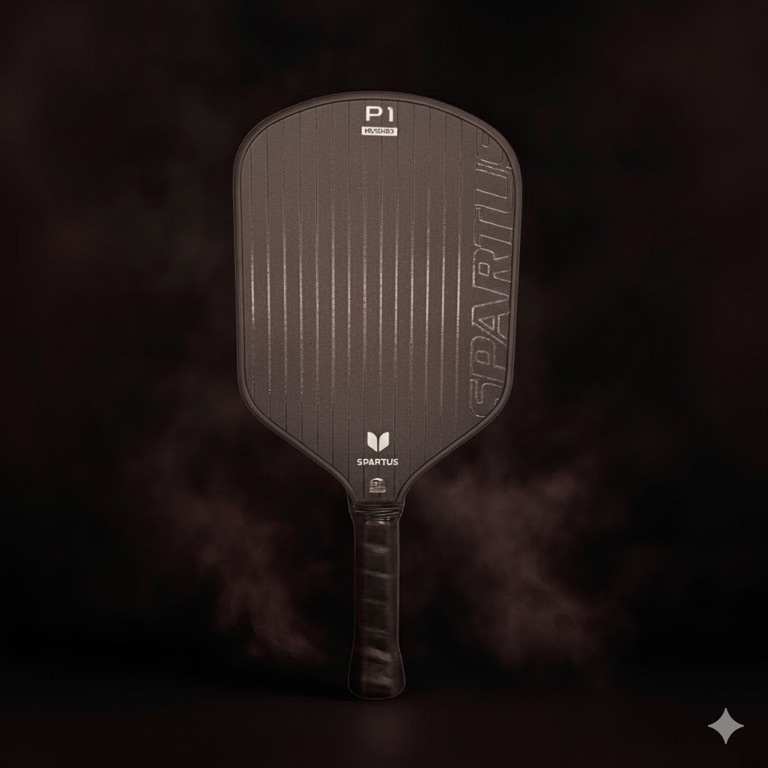
This is the snapshot we wish a reporter had written for us when we started shopping for paddles a year ago. Five things have shifted in pickleball paddle tech between mid-2025 and mid-2026, none of which are obvious from a glance at any single product page. The cumulative effect is that the buying decision today is genuinely different from the decision in 2024.
This page is a bird's-eye synthesis built on top of the named-source aggregated reviews we've shipped (9 paddles and counting) plus the buyer-tier guides for foam paddles, spin durability, and lead-tape setups. We're trying to be the part of your read where you understand the landscape; the individual reviews are where you decide.
Trend 1: Full-foam Gen 4 has displaced polymer honeycomb at the top tier
The biggest structural change. From 2018 through mid-2024, polymer-honeycomb cores dominated every premium paddle category. The face was raw carbon fiber; the core was hexagonal polymer; the design philosophy was "stiff, hollow, fast hands." Every Gen 3 paddle of consequence (Joola Hyperion, Selkirk Vanguard, CRBN 1) shared this architecture.
Late 2024 and 2025 saw the foam-core revolution. EPP foam cores with EVA foam rings, often with fiberglass middle layers in the face, started showing up at the premium tier. By mid-2026, the highest-scoring paddles in our reviews (Bread & Butter Loco at 9/10) and the most-talked-about new releases (Spartus P1 with Permagrit, 11six24 Vapor Power2 with HexGrit) are all foam.
What changed about the feel: foam paddles are denser on contact and produce a different "thud" sound. Some are stiff and hollow-feeling (the Loco, the Quanta) while others are dense and plush (the Spartus P1). The category has internal variation that polymer honeycomb didn't, because foam-core construction is more open to material experimentation.
What hasn't changed: paddle physics is still paddle physics. A foam paddle isn't automatically better than a great polymer paddle for every player. The Joola Perseus Pro IV uses a hybrid foam-injected polymer-perimeter approach that performs at the top tier without being a "full foam" paddle. The Selkirk LUXX Control Air uses a propulsion-style core construction that doesn't fit either bucket cleanly.
For the honeycomb-vs-foam underlying physics, see our foam vs honeycomb explainer.
Trend 2: The long-lasting-texture race finally has data behind it
For a decade, "long-lasting grit" claims were marketing. By 2026, two of them have third-party measurement data backing them up. This is a step change.
The contenders, with what we know:
- Permagrit (Spartus): ceramic-hybrid material applied stateside. Pickleball Studio measured ~1.3% RPM drop after 84 logged games. USAP-approved. Full review at /reviews/spartus-p1-hybrid/.
- HexGrit (11six24): proprietary hexagonal applied texture. Pickleball Studio measured ~3.3% RPM drop after 100 logged games. UPA-A only (too rough for USAP). Full review at /reviews/11six24-vapor-power2/.
- Diamond Tough (Six Zero): industry-grade diamonds infused into face epoxy. Six Zero claims 4x longer than raw carbon. No comparable third-party measurement data published. Full review at /reviews/six-zero-black-opal/.
- Florek and Infinigrit (Selkirk): proprietary face technologies across the LUXX line. No third-party logged-game measurements published.
The reference points: raw carbon fiber paddles in Pickleball Studio's same protocol dropped 13.8% (Franklin C45) to 17.1% (Bread & Butter Loco) over 100 games. Permagrit and HexGrit are an order-of-magnitude improvement. The full data table lives in our spin durability guide.
What this means for buyers: if you play 3+ sessions a week and spin output is your top priority, the long-lasting-texture premium is worth paying. If you play 1-2 sessions a week, the lifecycle math doesn't favor it; raw carbon fiber lasts long enough for typical replacement cycles.
Trend 3: The USAP-vs-UPA-A certification split has fragmented tournament eligibility
Until 2024, USA Pickleball (USAP) was the de facto sole arbiter of paddle legality for sanctioned play. The PPA Tour pro divisions adopted a separate governing body, UPA-A, which uses a different testing methodology. This was mostly invisible to rec players because the two bodies' testing thresholds rarely conflicted.
That changed with HexGrit. Pickleball Studio's framing, which we cite in our 11six24 Vapor Power2 review:
"USAP currently passes or fails paddles based on a roughness test of the surface, and UPA-A certifies paddles based on RPMs measured by shooting a ball out of a cannon at the paddle, and measuring the actual spin rate from the paddle. So, UPA-A allows you to possibly have a rougher texture than USAP depending on the build of your paddle."
The Vapor Power2 fails USAP's roughness test but passes UPA-A's RPM test. 11six24 has stated they have no plans to release a USAP-approved version. The Joola 3S had this same single-body certification ~18 months earlier.
Why this matters in 2026: many local sanctioned tournaments still follow USAP rules strictly. If you buy a UPA-A-only paddle and your local tournament director enforces USAP, you can't use it. Other tournaments accept either stamp. Casual rec play is rule-free. Verify your tournament rules before buying any UPA-A-only paddle.
The forward-looking question: will more brands follow 11six24 into UPA-A-only certification to chase the spin-output upper bound? Probably yes, gradually. The roughness-vs-friction-vs-deflection trilemma means brands chasing extreme spin-output durability will increasingly fail USAP's roughness gate.
Trend 4: Direct-to-consumer pricing has compressed the premium tier
The Selkirk Labs Project Boomstik retails for $333 direct from selkirk.com (verified June 2026). The Ronbus Quanta retails for $99 with a discount code. Per Pickleball Studio's blind sound testing, after both paddles are tuned with 15g of lead tape at 3 and 9, they're indistinguishable. Our full Quanta review covers the testing.
Olson's framing was direct:
"Where the Quanta wins is value. For the price of one Boomstik, you could buy three Quantas. Even with Selkirk's lifetime warranty, that's still a massive difference, and for most people, that's hard to ignore."
This isn't an isolated case. Bread & Butter, Spartus, 11six24, Ronbus, Vatic Pro, and several other brands are bypassing the traditional retail markup and selling directly. The premium-tier price has compressed by roughly 50%, and the performance gap between "premium-priced" and "direct-priced" has narrowed to almost nothing in the foam category specifically. The Vatic Pro V-Sol Pro at $99 is the latest data point: Pickleball Studio scored it 8/10 with the explicit "easily competes with $200+ paddles" framing, and Amazon's unbiased customer aggregate is 4.5/5 across 73 ratings on the largest single listing (more across multiple colorway listings).
What hasn't compressed: marketing budget, brand cachet, retail distribution, and warranty programs. Selkirk has all of these. Spartus and Bread & Butter do not. So the buying decision is increasingly: do you pay 2-3x for Selkirk-grade brand presence, or do you keep the savings and accept direct-to-consumer support?
Our take: for most rec players, direct-to-consumer is the right call in 2026. Brand recognition matters less than the actual paddle, and the cash difference is real ($120-200 saved per paddle).
Trend 5: The owner-vs-expert score gap has surfaced as a category signal
Across our 12 aggregated paddle reviews, the most consistent surprise is the gap between expert reviewer scores and the curated brand-page owner aggregates. Important caveat up front: most paddle owner aggregates currently available are from the brand's own product pages, which are marketing surfaces (the brand controls which reviews appear and can suppress negatives). Treat them as directional rather than as unbiased third-party scores. We'll replace these with Amazon, Google, or independent retailer aggregates as we can pull verifiable third-party samples. With that caveat, three patterns recur:
- Polarizing-but-targeted paddles: Owners self-select for the playstyle the paddle rewards. Expert reviewers test across all shot categories. The Six Zero Black Opal scored 5/10 from Pickleball Studio (because the soft game suffers) but 4.7/5 on Six Zero's brand page (121 reviews). The gap is real and predictable for any paddle with a strong design point of view, even after discounting brand-page bias.
- Tinkerer paddles: Owners arrive primed to add weight and accept the customization step. Experts review out-of-box and stock. The Ronbus Quanta scored 7/10 from Pickleball Studio (with the explicit "must add weight" caveat) but 4.89/5 on Ronbus's brand page (70 reviews). Most Quanta buyers tune the paddle, so the curated reviews reflect the tuned paddle, not the chassis.
- Established-favorite paddles: Owners who buy a Bread & Butter Loco are coming from research; they know what they're getting. The 9/10 Pickleball Studio score and the strong brand-page reception align cleanly. No gap, because owner self-selection matches the expert framing.
The takeaway for 2026 buying decisions: don't read either score in isolation. The gap (or its absence) tells you something about the paddle's positioning. A polarizing paddle with a strong owner aggregate is selling to the right players; a polarizing paddle with weak owner aggregate is mismatched to its market. The Quanta-style "expert score below the owner score because of a tuning caveat" is a positive signal if you're willing to do the tuning.
What this means for paddle shopping in mid-2026
If you're a rec player at 3.0-3.5
Most of these trends don't affect you yet. Drilling time produces bigger gains than paddle changes. Buy a sub-$100 paddle (see best paddles under $100) and spend the saved money on lessons or league fees. Re-evaluate at 3.5+.
If you're 3.5-4.0 and your paddle is more than 12 months old
You're the buyer the foam-paddle category was built for. The Bread & Butter Loco is the lowest-regret first foam paddle. The Spartus P1 Hybrid is the right call if spin durability is your top concern. Skip the polarizing paddles (Black Opal) until you've used a balanced foam paddle and know your preferences.
If you're 4.0+
You're benefiting most from the trends. Direct-to-consumer pricing means you can afford to maintain 2-3 paddles for different play environments. Long-lasting textures matter more because you're playing 4+ sessions a week. The lead-tape category is open to you. See our best foam paddles 2026 guide for the full decision tree.
If you're a tournament player
Verify USAP certification before any purchase. UPA-A-only paddles are growing and the certification gap is real. The Spartus P1 Hybrid is currently the only paddle with measured spin durability AND USAP certification, which makes it the safest premium-tier tournament purchase.
What's coming next (2026 H2 and 2027)
The early signals across our reviews and the broader gear-coverage landscape point at a few directions:
- Already shipped: factory-tuned, player-removable MOI weights at the flagship tier. Selkirk's new Omni paddle (launched June 2026 at $300) ships with pre-installed perimeter weights players remove and reapply themselves, with on-paddle reference marks. This is the first mainstream flagship to put balance tuning in the user's hands rather than a pro shop's. Expect peer brands to follow within 12 months if independent reviewers confirm the mounting system durability.
- More long-lasting-texture entries. Selkirk Florek and Infinigrit will get measurement data eventually. Expect 4-6 more brands to enter the long-lasting-texture race in 2026 H2.
- More UPA-A-only releases. Brands chasing maximum spin will increasingly fail USAP's roughness test. The split will become more visible to rec players who buy paddles for tournament play.
- Longer-term durability data. Pickleball Studio's logged-game protocol is the only public-facing measurement system. As they extend testing past 100 games (and as other reviewers adopt similar protocols), the early Permagrit-and-HexGrit lead may either hold or get reset.
- Direct-to-consumer expansion. Expect more $99-149 foam paddles from new brands targeting the price-compressed premium tier.
- Paddle-specific lead-tape recipes published by manufacturers. Currently the only sources for tuning recipes are independent reviewers like Pickleball Studio. Brands will start publishing their own setups as the lead-tape market matures.
What this guide is, and isn't
This is a snapshot of paddle tech as of mid-2026, sourced primarily from Pickleball Studio's testing protocol and our 9 aggregated reviews. It's not exhaustive. We don't cover the senior-paddle category, paddle skins, tennis-elbow-friendly designs, or pro-tour-only paddles. We don't review paddles we can't aggregate from named sources, and we don't manufacture our own measurements (we synthesize the existing ones).
If a trend on this page changes (long-term durability data resets the rankings, USAP loosens its roughness test, a new core technology emerges), we'll update this page with a new lastReviewed date. Most paddle-tech changes happen on roughly 6-month cycles, so a yearly re-publish is the floor.
Where to go next
For specific paddles, our reviews index has 14 aggregated reviews with verbatim quotes from Pickleball Studio plus owner reactions. For ranked picks across player profiles, our master 2026 best paddles ranking ties the reviews into nine fit-by-profile picks. For category-level decisions, the best foam pickleball paddles guide, the spin durability deep dive, and the lead-tape setup guide stitch them into buying-tier decisions. For the broader paddle-buying framework, see how to choose a pickleball paddle. For algorithmic personalization, our paddle finder scores all 14 paddles in 90 seconds.
References
- Pickleball Studio: Bread & Butter Loco Review (9/10) · Source for foam-paddle benchmark scoring and testing protocol
- Pickleball Studio: Spartus P1 Hybrid Review (8/10) · Permagrit testing methodology, RPM measurements, and certification context
- Pickleball Studio: 11six24 Vapor Power2 Review (8/10) · HexGrit measurements, USAP-vs-UPA-A certification breakdown
- Pickleball Studio: Six Zero Black Opal Review (5/10) · Diamond Tough framing and the polarizing-paddle case study
- Pickleball Studio: Ronbus Quanta Review (7/10) · Boomstik blind sound test and direct-to-consumer pricing case study
- USA Pickleball equipment standards · USAP certification authority and surface-roughness testing protocol
- UPA-A pro tour governing body · PPA Tour pro-division paddle certification, RPM-cannon testing
- Our brief: Selkirk Omni paddle launch (June 2026) · Adjustable MOI weights, the new flagship-tier differentiator
Frequently asked
Tap a question to expand.

Reader notes on this guide
Sign in with your email to post. We do not run ad networks; comments are moderated for spam and abuse.
Loading comments...
Sign in to add a comment.