
Pickleball paddle lead tape (2026): where to put it, how much, and the named-paddle setups that work
By My Pickleball Connect Team 11 min read Last reviewed
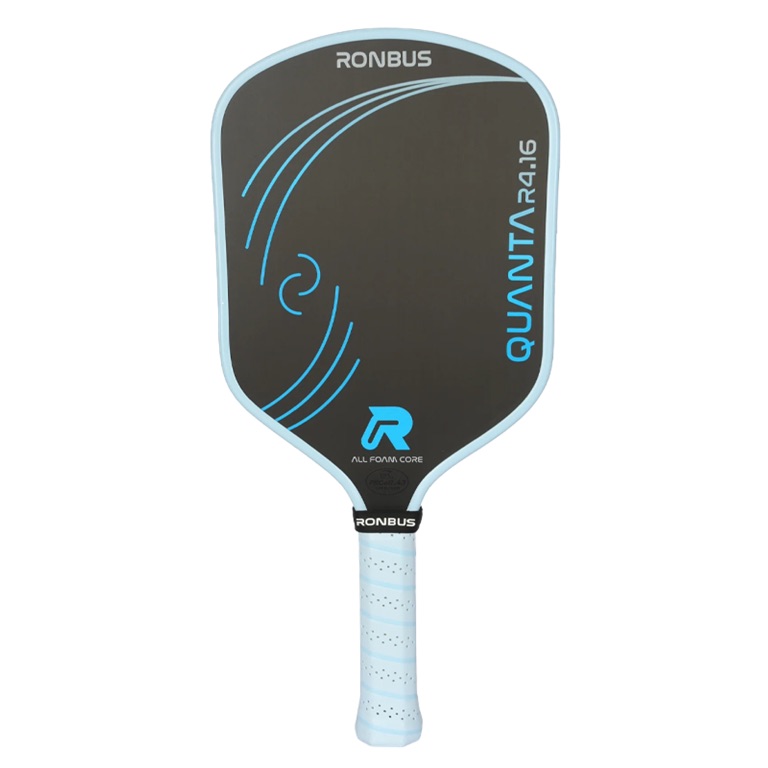
Most premium foam paddles in 2026 ship with one of two design philosophies. Either the manufacturer factory-tunes the paddle for plug-and-play (the Bread & Butter Loco approach) or they ship a chassis that needs lead tape to perform at the top tier (the Ronbus Quanta approach). The second category is where most of the value live: paddles costing $90 to $130 that compete with $250 paddles after $20 of lead tape.
This guide stitches together every named-paddle lead-tape setup we've cited in our reviews, with the specific weight, position, and what problem each setup solves. Per Pickleball Studio's Chris Olson, who tunes paddles across 400+ tested units to a 4.70 DUPR rating, the patterns are consistent enough to be teachable.
Why add lead tape
Three things change when you add weight to a paddle, and each maps to a different problem:
- Sweet spot expansion (3 and 9): Adding ~10-15g of weight at the 3 o'clock and 9 o'clock positions on the face widens the perceived sweet spot, reduces twist on off-center hits, and increases stability on blocks. This is the most common application and the one Pickleball Studio recommends most often.
- Plow-through power (head/12 o'clock): Adding weight at the top of the face increases swing weight and helps the paddle "plow through" the ball on drives and serves. Smaller amounts (3-5g of half-gram tungsten in a 5" strip) tune up power without making the paddle feel head-heavy.
- Stability and dampening (throat/6 o'clock): Adding weight at the throat shifts balance toward the handle, reduces vibration, and increases hand speed. Less common as a primary tune but useful for elongated paddles that already feel head-heavy.
The honest framing: most rec players will not feel the difference between a perfectly tuned paddle and a stock one. The biggest gains from lead tape come for players in the 3.5+ range who already notice when their paddle twists on off-center hits or when their drives lack plow-through. Below 3.5, drilling time produces bigger gains than tape time.
The named-paddle setups (from Pickleball Studio)
Selkirk Boomstik (Olson's reference recipe)
Pickleball Studio reviews multiple paddles by comparing them to the Selkirk Boomstik, which has been Olson's main paddle in 2025-2026. His Boomstik setup is referenced as the recipe for several other paddles:
"15g of weight at 3 and 9. I used 2g per inch lead tape from Amazon and had to stack it to fit that much in."
This is the canonical "open up the sweet spot, get top-tier power" setup for foam paddles. Most subsequent setups Olson tries on competing paddles start from this recipe and adjust.
Ronbus Quanta R2 widebody (Olson's main tune)
Per our Ronbus Quanta review, Olson copies the Boomstik recipe directly:
"I started with the R2 widebody and copied the same setup Selkirk used on the Boomstik: 15g of weight at 3 and 9. Even though 15g sounds like a lot, these paddles start light, so the final paddle didn't feel heavy. After adding the weight, the paddle felt completely different. The sweet spot opened up, the twist issues went away, and it hit much harder."
Olson explicitly tested lighter setups (10g at the throat-up-the-sides) and concluded they didn't unlock the paddle:
"If you want the full power potential, 15g at 3 and 9 is the way to go."
The Quanta is the clearest case where the lead-tape investment is non-optional. Olson's verdict: "If you don't plan to add weight, I'd skip the Quanta."
Bread & Butter Loco widebody (lighter, optional tune)
The Loco ships tuned-enough out of the box that lead tape is optional, not required. Per our Bread & Butter Loco review, Olson uses a lighter recipe:
"My go-to setup on the wide-body was 10 grams total, five on each side at about 3 and 9 o'clock. That small change made a noticeable difference in sound, stability, and feel. The paddle felt more aggressive without becoming sluggish."
For the elongated Loco he leaves it stock (already heavy enough). For the hybrid, ~3g per side. The pattern: Loco responds well to small tape additions but doesn't need the full 15g treatment to feel finished.
11six24 Vapor Power2 (head-weighted variation)
Olson breaks his usual 3-and-9 pattern on the Vapor Power2. Per our 11six24 Vapor Power2 review:
"The final setup that I landed on and enjoyed was taking the 5 gram slyce slyders and placing them at 3 and 9, and then adding roughly a 5" strip of half gram tungsten at the head of the paddle. I rarely add weight to the head of paddles, but it just felt like it helped with the plow through on the Power2 and made the sweet spot feel a bit more comfortable up at the head."
The before/after specs: 111 swing weight → 119, 6.57 twist weight → 7.64. For most rec players, Olson recommends a lighter version: "If you just put a bit of weight close to 3 and 9 or just above the bottom corners, it would be plenty to tune this up nicely."
Six Zero Black Opal (weight tape can't fully fix it)
Worth including as the counter-example. Per our Six Zero Black Opal review, Olson tested two setups:
- Light tune: 12g of tungsten pods (two 3g pods on each side, just above the bottom corners). Result: swing weight 113→117, twist weight 6.07→7.26. Helped but didn't fix the small-sweet-spot issue.
- Aggressive tune: wrap the entire head in half-gram tungsten tape. Result: swing weight to 121, twist weight to 7.02. "This improved performance the most, but now you are also taking a 14mm paddle and making it the swing weight of an elongated paddle just to improve the sweet spot."
The lesson: lead tape can compensate for some sweet-spot deficits, but it can't fully fix a fundamentally finicky face. Olson's takeaway on the Black Opal: "Yes you can improve the sweet spot performance with weight, but it won't entirely fix the small sweet spot."
Franklin Aurelius 12.7mm (the ultra-light tune)
Per our Franklin Aurelius review, Olson tested two setups on Anna Leigh Waters' signature paddle. The recommended tune balances weight benefit with maneuverability:
"By removing the 12 grams of weight from the head of the paddle, it becomes much more maneuverable again. The swing weight from 118 all the way down to 104. 104 is still what I would consider in the 'ultra-light' category. So, even with a significant amount of weight added, the paddle is still light, and you are getting the performance benefits of added weight."
Final recipe: 24g (12g per side at the 3 and 9 positions, no head weight). Stock 92 swing weight goes to 104. Different design philosophy than the Boomstik 15g recipe, because the Aurelius starts so much lighter.
The setup recipe table
| Paddle | Total weight | Position | Tape type | What it fixes |
|---|---|---|---|---|
| Selkirk Boomstik | 15g | 3 and 9 (7.5g per side) | 2g/inch tungsten, stacked | Sweet spot, top-tier power |
| Ronbus Quanta R2 widebody | 15g | 3 and 9 (7.5g per side) | 2g/inch tungsten | Sweet spot, twist, opens up the paddle |
| Bread & Butter Loco widebody | 10g | 3 and 9 (5g per side) | Standard tungsten | Sound, stability, feel (optional tune) |
| Bread & Butter Loco hybrid | ~6g | 3 and 9 (~3g per side) | Standard tungsten | Marginal stability tweak |
| 11six24 Vapor Power2 | ~12.5g | 5g slyce slyders at 3 & 9, plus 5" of half-gram tungsten at head | Slyce slyders + half-gram tungsten | Sweet spot + plow-through on drives |
| Six Zero Black Opal (light) | 12g | Two 3g tungsten pods per side, above bottom corners | Tungsten pods | Partial sweet-spot help (incomplete fix) |
| Six Zero Black Opal (aggressive) | ~10-15g across the head | Half-gram tungsten wrapped around entire head | Half-gram tungsten | Best sweet-spot improvement on this paddle (but adds elongated-style swing weight to a 14mm hybrid) |
| Franklin Aurelius 12.7mm | 24g | 12g per side at 3 and 9 (no head weight) | Standard tungsten | Unlocks the ultra-light chassis (stock SW 92 → 104) while keeping it maneuverable |
The two main tape types and how to choose
Tungsten tape (1g/inch and 2g/inch, half-gram)
The default for most rec setups. Tungsten is denser than lead, so the same weight takes less surface area. Common formats:
- 2g/inch tungsten: the densest common option. Used in Olson's 15g-at-3-and-9 setups for the Quanta and Boomstik. You can fit 7.5g per side in roughly 4 inches of tape, doubled-up if needed.
- 1g/inch tungsten: spreads the weight over more surface area. Better for distributed setups like 6-inch strips up the sides.
- Half-gram tungsten: the most precise option for fine-tuning. Olson uses this on the Vapor Power2 head and on the aggressive Black Opal head wrap.
Tungsten is non-toxic (unlike old-school lead tape, which can leave a residue on hands), more compact, and easier to remove without damaging paddle face graphics. Most rec players should default to tungsten.
Pre-formed weight pods (Slyce Slyders, etc.)
Solid-weight pods that stick onto the paddle face at the 3 and 9 positions without requiring any cutting or stacking. The Slyce Slyder line is what Olson uses on the Vapor Power2 and several other reviews. Trade-offs:
- Pros: faster install, cleaner look, repositionable, predictable weight per pod (5g and 3g are standard).
- Cons: less weight customization (you're locked to standard pod sizes), more visible than thin tungsten tape, sometimes thicker so they catch on bag pockets.
If you want to experiment with multiple setups before committing, pods are easier to swap. If you've already converged on a recipe and want a clean install, tungsten tape is the more disciplined choice.
Lead tape (the older option)
Lead tape is still available and sometimes recommended for very precise tuning, but the toxicity concerns are real. Lead can leach onto hands, gear bag interiors, and (if you sweat heavily) onto skin during play. Tungsten has effectively replaced lead in serious tuning conversations and is what we recommend.
The decision tree: should you tape your paddle?
1. Is your paddle stock-tuned or chassis-tuned?
Loco, Spartus P1, Selkirk LUXX line, and most Joola Pro line: stock-tuned. Lead tape is optional and incremental. The Quanta, Vatic Pro Prism Flash, lighter J2NF and FC Plus variants: chassis-tuned. Lead tape is essentially required to get the paddle to its potential.
2. Are you noticing twist on off-center hits?
If yes: 10-15g at 3 and 9 is the targeted fix. Start at 10g (5g per side) and add only if needed.
3. Is your power lacking on drives but sweet spot fine?
If yes: 3-5g of half-gram tungsten at the head, in a strip across the top. Don't overdo this; head weight makes the paddle slow at the kitchen.
4. Are you happy with the paddle stock?
Stop. Don't change it. Olson on the Spartus P1: "I tried this paddle both weighted with 5 gram slyce slyders at 3 and 9, as well as stock, and I honestly preferred the paddle stock." Some paddles are already at their optimum. Adding weight to a tuned paddle can make it worse.
Common lead-tape mistakes
Going too heavy. 15g sounds modest but it's significant on a paddle that started at 7.5oz. Overloading produces a paddle that's too slow at the kitchen line. If you can't recover for a fast hands battle, your tape is too heavy.
Asymmetric application. Always tape symmetrically (3g per side, 5g per side, 7.5g per side). Asymmetric weight changes the swing path and can introduce torque issues in your stroke.
Weight in the wrong place for the symptom. If your paddle pops up balls on resets, the fix is grip pressure or technique, not lead tape. If your paddle is slow at the kitchen, the fix is lighter tape (or removing tape), not adding more.
Buying cheap generic tape. Use real tungsten or lead tape from a reputable supplier. Tape that doesn't bond to the paddle face will peel mid-rally, create unpredictable weight changes, and ruin the paddle's edge guard if it migrates.
Where this fits in our coverage
For the underlying paddle reviews behind these setups: Ronbus Quanta, Bread & Butter Loco, 11six24 Vapor Power2, Six Zero Black Opal. For the buyer's-tier synthesis, see best foam pickleball paddles 2026. For the texture-longevity slice, see pickleball paddle spin durability 2026. For the broader paddle-buying framework, see how to choose a pickleball paddle.
Last note on the spirit of the page: this is the kind of synthesis we keep shipping because no other free pickleball resource has it in one place. Our paddle reviews already cover individual setups; this guide is the cross-cut.
References
- Pickleball Studio: Ronbus Quanta Review (7/10) · Source for the 15g-at-3-and-9 Boomstik recipe applied to the Quanta R2 widebody
- Pickleball Studio: Bread & Butter Loco Review (9/10) · Source for the lighter 10g-at-3-and-9 widebody setup and per-shape adjustments
- Pickleball Studio: 11six24 Vapor Power2 Review (8/10) · Source for the slyce slyder + half-gram tungsten head-weighted setup
- Pickleball Studio: Six Zero Black Opal Review (5/10) · Source for the partial-fix and aggressive-fix Black Opal setups
- USA Pickleball equipment standards · Authoritative source for USAP paddle certification rules and the absence of a maximum weight rule
Frequently asked
Tap a question to expand.

Reader notes on this guide
Sign in with your email to post. We do not run ad networks; comments are moderated for spam and abuse.
Loading comments...
Sign in to add a comment.