
Best foam pickleball paddles (2026): the Gen 4 lineup synthesized
By My Pickleball Connect Team 12 min read Last reviewed
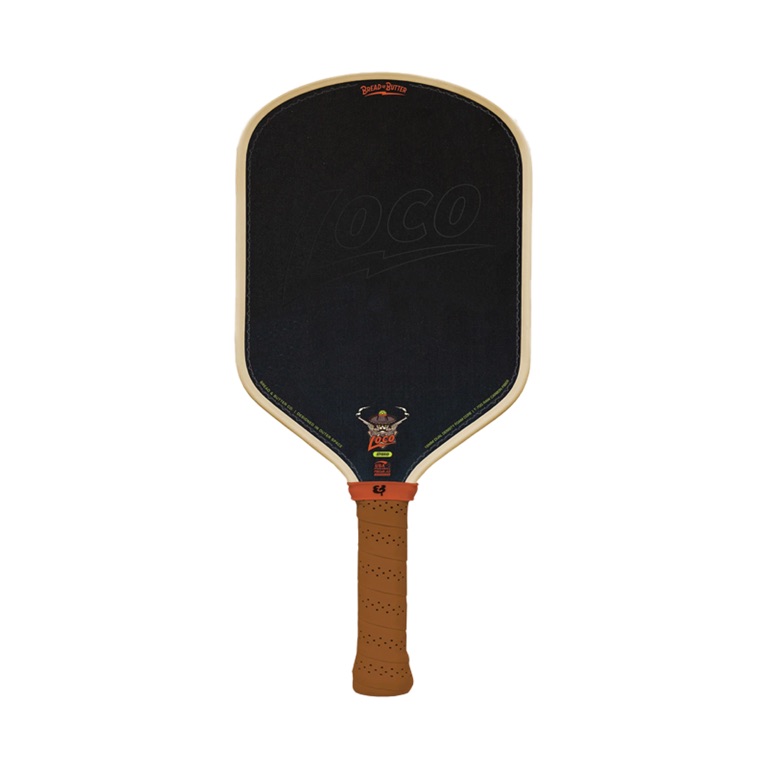
The foam-paddle category is the most active corner of pickleball gear in 2026. Four serious entries have shipped that we've fully reviewed: the Bread & Butter Loco, the Spartus P1 Hybrid, the Selkirk LUXX Control Air, and the Six Zero Black Opal. Pickleball Studio's expert scores on the four span 5 to 9 out of 10, which is a wider spread than any other paddle category right now. This is the synthesis: who each paddle is for, where they actually differ, and how to pick.
For background on the underlying technology shift (Gen 3 polymer-honeycomb to Gen 4 full-foam), see our foam vs honeycomb explainer. This guide is the buyer's tier on top: which paddle wins which decision.
Quick reference
Each pick links to our full aggregated review with verbatim expert and owner quotes.
- Best overall, control-leaning Gen 4 power: Bread & Butter Loco (Pickleball Studio 9/10). $199 retail.
- Best long-lasting texture: Spartus P1 Hybrid (Pickleball Studio 8/10). $219.99. After 84 logged games, near-zero surface-roughness drop, while the Loco lost ~17%.
- Best for control-leaning rec players: Selkirk LUXX Control Air (Invikta / Jack Sock Edition). The control benchmark in the Selkirk LUXX line and the only paddle in this lineup our editor has personally hit with for over a year.
- Best aggressive heavy-and-fast play, polarizing: Six Zero Black Opal (Pickleball Studio 5/10; Six Zero brand-page rating 4.7/5 from 121 reviews, flagged as curated). $250. Power that rivals anything on the market with a finicky sweet spot.
- Best value pick: Vatic Pro V-Sol Pro (Pickleball Studio 8/10; Amazon unbiased rating 4.5/5 from 73 ratings on the largest single listing). $99 with PBSTUDIO code. Olson: "easily competes with $200+ paddles."
- Best budget-tier tinkerer pick: Ronbus Quanta (Pickleball Studio 7/10; Ronbus brand-page rating 4.89/5 from 70 reviews, flagged as curated, no Amazon distribution). $99 with PBSTUDIO. Sound-tests indistinguishable from a Selkirk Boomstik after 15g of lead tape.
The control-vs-power axis
The cleanest way to understand the four paddles is to plot them on a single axis from soft-game-leaning to power-leaning. The split corresponds to who each paddle is built around.
- Most soft-game / control: Selkirk LUXX Control Air. The clue is in the name. Florek carbon face, propulsion-style core, balanced weight. Players who reach for this paddle are dink-rally first.
- Balanced, slightly control-leaning: Bread & Butter Loco. Per Chris Olson at Pickleball Studio: "It doesn't have the instant pop of the Boomstik, which actually helps slow the ball down just enough to make placement easier and more reliable." Power lands when needed, control wins the rallies.
- Mid power, dense feel: Spartus P1 Hybrid. Olson places it: "above something like a J2NF, but below a Loco for both pop and power. Overall, I'd place it pretty firmly in the mid tier power category." For the same mid-tier power band on an elongated chassis, see our Honolulu J6CR review (Pickleball Studio 7/10), which Olson called "if you took the J2NF and just made it a little bit better."
- Power-first, aggressive only: Six Zero Black Opal. Olson: "This is very clearly a power paddle, and it rivals the power of anything at the top right now... For people who want to play heavy and fast, I would give the Black Opal like a 9 out of 10. But for the soft game, I'd be giving it closer to a 4 or 5 out of 10."
The spin-durability war
The other axis the foam category is competing on right now is texture longevity. Raw carbon fiber faces have always lost grit over time. Three of these paddles are taking a swing at fixing it, and Pickleball Studio is the only outfit running a quantitative long-term study with actual measurements.
Olson's logged-game protocol (each game tracked individually rather than hours, plus periodic surface-roughness and RPM tests) produced these data points at time of writing:
- Spartus Permagrit (P1): after 84 games, near-zero drop in surface roughness. RPM went 2044 → 2017 (a fresh same-day P1 measured 2068, so the used paddle is statistically equivalent).
- 11six24 HexGrit (Vapor Power2): after 100 games, RPM dropped from 2,141 → 2,071 (~3.3% drop). Materially better than raw carbon fiber. Caveat: HexGrit is too rough to pass USAP certification, so the paddle is UPA-A-only.
- Bread & Butter Loco (raw carbon fiber): after 100 games, ~17% RPM drop (2048 → 1697) and ~20% surface-roughness drop. Standard raw-carbon decay.
- Franklin C45 (raw carbon fiber, comparison): after 100 games, ~13.8% RPM drop and ~19.8% surface-roughness drop.
- Six Zero Diamond Tough (Black Opal): Pickleball Studio called it "potentially promising" but flagged that more long-term testing is needed. No comparable durability data published yet.
- Selkirk LUXX Control Air (Florek face, claimed long-life): no quantitative third-party study published. Owner reports anecdotally suggest above-average longevity but the data does not yet exist.
If spin durability is your top priority, the Spartus is the only one with a measured, peer-reviewable advantage at this writing. Diamond Tough and Florek may close that gap; the data does not yet exist either way. Olson explicitly cautions: "I am not saying that the Spartus P1 has grit that is literally indestructible and is never going to wear down, and more long term testing needs to be done."
The four picks, by player profile
Bread & Butter Loco: best overall
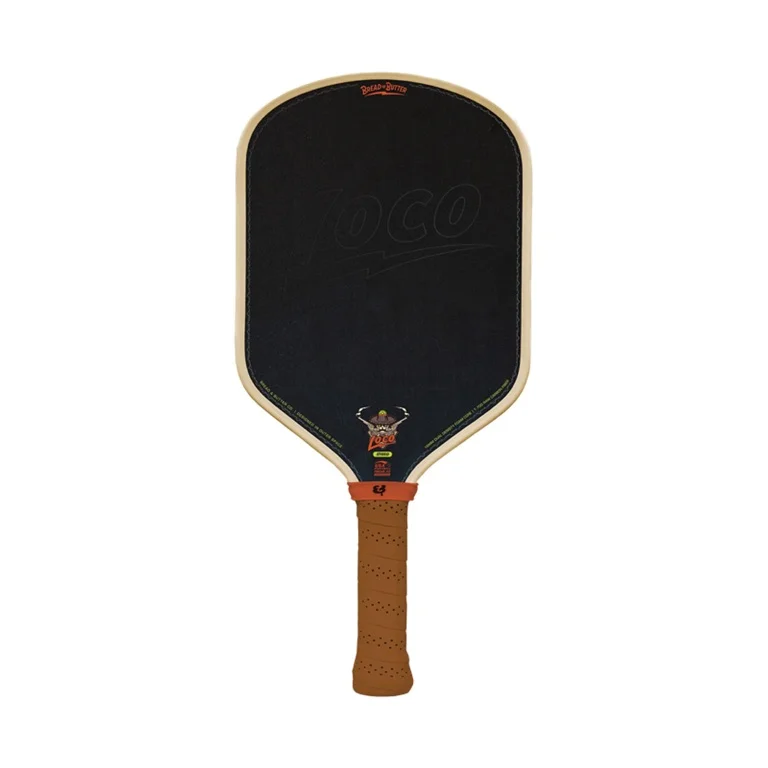
The Loco is the foam paddle most rec players should consider first. Pickleball Studio scored it 9/10 and called it "one of the best full foam options out right now." It comes in three shapes (widebody, hybrid, elongated), runs $199 retail, and Olson noted: "After a month of real use, the Loco has proven to be one of the most balanced foam paddles I've tested. It delivers tournament-level performance without needing a lot of tinkering or added weight."
The widebody specifically suits 3.5 to 4.5 rec players who want a forgiving sweet spot. The full review with all the verbatim quotes and the lead-tape setup Olson uses lives at /reviews/bread-butter-loco/.
Spartus P1 Hybrid: best for spin durability
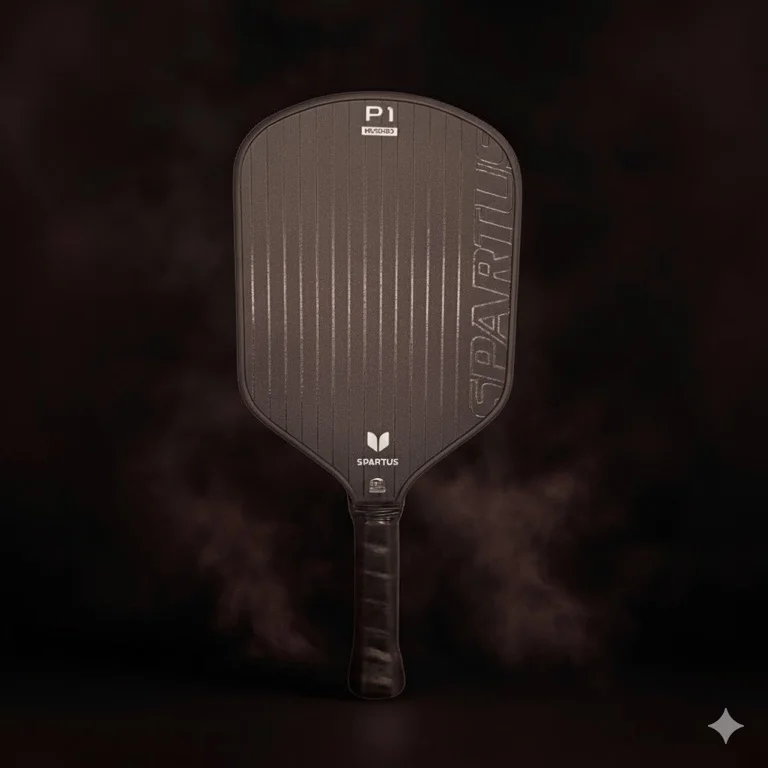
The right pick if your priority is keeping spin output high over time. Permagrit, the ceramic-hybrid surface applied stateside, is the only long-lasting-texture claim on this list with measured data behind it. Olson: "We've seen multiple companies claim long lasting textures, but this is the first one that I have seen truly hold and take a beating, and that to me, is genuinely exciting."
It's hybrid-only at time of writing (other shapes are pre-order). It's heavier than the average hybrid (swing weight 117), and there have been reports of loose edge guards which Spartus is publicly addressing. Owner aggregate is 4.9/5 across 75 reviews on the brand's product page. The full review at /reviews/spartus-p1-hybrid/ covers the testing methodology in detail.
Selkirk LUXX Control Air (Invikta / Jack Sock Edition): best for control-leaning play
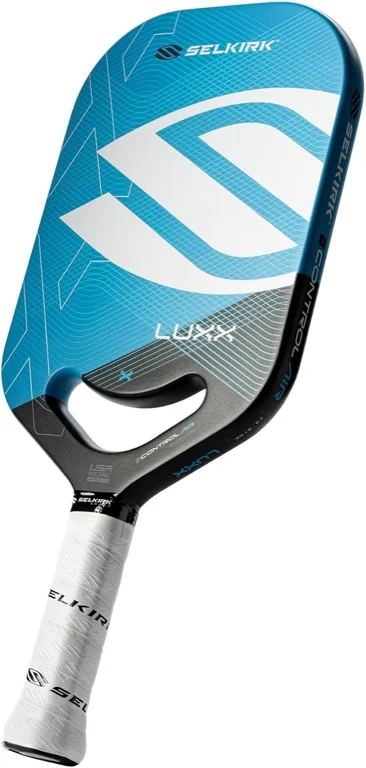
The LUXX Control Air sits in a different design philosophy than the other three. Selkirk's Florek carbon face is built for soft-game touch first, with power as a secondary characteristic. The Invikta shape (used by Jack Sock and Anna Bright on tour) is the elongated reach version. The Jack Sock special edition is the colorway, not a different paddle.
It's the most control-forward pick on this list, and the right paddle for a player whose game is anchored at the kitchen line, who values reset reliability over drive power, and who wants the marquee Selkirk build quality. The full review at /reviews/selkirk-luxx-control-air-jack-sock/ covers shape choice, the colorways, and the Hesacore Tour grip + tungsten tape setup that fine-tunes the stock paddle.
Six Zero Black Opal: most polarizing, best for aggressive players

The Black Opal is the riskiest pick on this list, and that's reflected in the rare-low Pickleball Studio score (5/10) coexisting with a strong owner aggregate (4.7/5 across 121 reviews on Six Zero's product page). The split is real and the reasons are predictable.
What goes right: power that rivals the Boomstik and Gearbox GX2 Power per Olson, three new pieces of proprietary technology in one paddle (different foam core, Diamond Tough texture, Power Gel layer), and a feel unlike anything else in foam. Olson: "If you really enjoy playing quickly and trying to end the points off of shake and bakes, or crashing your opponent with heavy drives, the Black Opal is going to be a lot of fun."
What goes wrong: the sweet spot is unforgiving, especially on the bottom third. Soft-game shots (resets, drops, dinks) become finicky when off-center. Olson, candidly: "For me personally, I would not consider taking it to a tournament. I don't think the trade off in sweet spot consistency is worth the marginal extra power I gain compared to other paddles."
The buy framing: this is a paddle for aggressive, center-strike, hard-third-shot-drive players, ideally tested through Pickleball Central's 30-day return policy or another demo program before commitment. The full review at /reviews/six-zero-black-opal/ goes deeper.
How to pick: a three-question decision tree
Working from the highest-leverage question down:
1. Which side of the soft-vs-power axis is your game on?
Look at where you actually win and lose points. If you win on patience at the kitchen and lose when forced into bangers, you're soft-game leaning, and the LUXX Control Air or the Loco is the right tier. If you win on drives and finish points off third-shot patterns, you're power-leaning, and the Spartus P1 or the Black Opal fits better.
2. How important is spin durability over a 12-month horizon?
If it's a top-3 concern, Spartus P1 Hybrid wins on measured data. If it's not, the choice opens up. Most rec players replace paddles within 12 months anyway, so the durability premium has lower lifecycle value than premium power durability. If you only play 1-2 sessions a week, raw carbon fiber on the Loco lasts long enough.
3. Are you willing to demo, or do you need confidence on first purchase?
Demo-first players (Six Zero ships through Pickleball Central with a 30-day return) get more option flexibility on polarizing picks like the Black Opal. Buy-first players should stay on safer picks like the Loco or LUXX, where the risk of a bad fit is materially lower. The Spartus is direct-to-consumer only via gospartus.com.
What we're not recommending here, and why
This guide covers paddles we've personally reviewed at depth with named-source aggregation. Several other Gen 4 foam paddles are worth honest mentions, none of which we've fully reviewed yet:
- Selkirk Boomstik: the elephant in the room for raw power foam paddles. Olson references it as the foam-paddle benchmark across all four reviews above. Aggregated review pending.
- Joola Pro IV / Pro V: Joola's foam-injected polymer-perimeter approach is technically different (the polymer perimeter blends polymer and foam). Reviews live at /reviews/joola-perseus-pro-iv/ and /reviews/joola-perseus-pro-v/.
- CRBN 1X TruFoam Genesis: CRBN's flagship Gen 4 foam paddle. Aggregated review pending.
- Ronbus Quanta: our full aggregated review is now live at /reviews/ronbus-quanta/. Pickleball Studio scored it 7/10 with the explicit "must add 15g of lead tape" caveat. After tuning, Olson sound-tested it blind against his Selkirk Boomstik and could not tell them apart.
- Honolulu J6CR: our aggregated review is now live at /reviews/honolulu-j6cr/. Pickleball Studio 7/10 First Impressions. Elongated foam paddle at $195, the fastest-swinging elongated Olson has tested. The miss: no long-lasting texture story; raw carbon fiber only.
- Luzz Inferno: Olson references it as a direct competitor throughout the reviews above, but our aggregated review is still in queue.
What we'd buy if forced to pick one
If a 3.5-4.0 rec player asked for a single recommendation with no demo time and a $200-220 budget, we'd point at the Bread & Butter Loco widebody. The 9/10 from Pickleball Studio, the broad sweet spot, and the price-to-performance ratio make it the lowest-regret pick in the lineup. The Spartus P1 is the right answer if spin durability is your specific top concern. The Black Opal is the right answer only with demo-first commitment; the polarizing nature is real and should not be ignored.
If the budget is $99 instead of $200+, the answer changes. The Vatic Pro V-Sol Pro at $99 with the PBSTUDIO code (Olson 8/10, Amazon unbiased rating 4.5/5 across 73 ratings on the largest single listing) is the strongest value pick of 2026. Plays well stock without lead tape, has the same Boomstik-family floating-core construction at one-third the price. The Ronbus Quanta at the same price tier is the alternative for tinkerers willing to add 15g of lead tape to unlock it (note: Ronbus is direct-to-consumer only, no Amazon distribution, so we don't have unbiased third-party rating data on it yet).
What this guide is not
This is not affiliate-driven cherry-picking. We have no Amazon ASINs for the Loco or the Spartus P1 (both are direct-to-consumer brands). We get nothing if you click through to gospartus.com or to Bread & Butter. We earn commissions only on the LUXX and Black Opal links if those pages happen to route to retailers we're partnered with; the recommendations here are otherwise independent of monetization.
Premium-grade aggregation across paid and free pickleball coverage is the bar we hold ourselves to: more named-source quoting, more cross-citation, and more honest framing of where each paddle wins and loses. If you want this kind of synthesis to keep shipping, the most useful thing is to share the page with a friend who's shopping or to drop a comment on one of the individual review pages.
Related: our broader paddle buying framework covers the spec axes that matter (weight, swing weight, twist weight, core, face), and our best pickleball paddles for women guide overlaps in the lighter-swing-weight section of this lineup.
References
- Pickleball Studio: Bread & Butter Loco Review (9/10) · Chris Olson, primary expert source for the Loco section
- Pickleball Studio: Spartus P1 Hybrid Review (8/10) · Chris Olson, source for Permagrit testing methodology and durability data
- Pickleball Studio: Six Zero Black Opal Review (5/10) · Chris Olson, source for the polarizing-paddle framing
- Spartus P1 Hybrid product page · Source for owner-aggregate score and verbatim owner quotes
- Six Zero Black Opal product page · Source for owner-aggregate score and verbatim owner quotes
- USA Pickleball approved equipment list · Authoritative tournament-eligibility source for any paddle on this page
Frequently asked
Tap a question to expand.

Reader notes on this guide
Sign in with your email to post. We do not run ad networks; comments are moderated for spam and abuse.
Loading comments...
Sign in to add a comment.