
Best pickleball paddles for women in 2026: grip, swing weight, and arm-friendly picks
By My Pickleball Connect Team 9 min read Last reviewed

I haven't played any of these. This is a research piece, not a hands-on review.
What I did do: read 30+ reviews, cross-referenced measured specs from Pickleball Studio's spec database against manufacturer sheets, pulled fit-quiz data from Pickleball Effect's tuning lab, and spent a weekend reading r/pickleball threads where women players actually talk about the paddles they keep in their bags.
The picks below are the paddles that came up consistently across multiple independent reviewers, with verified specs cited. When we add a first-person review of any of these paddles to the site, it'll be on a separate review page and clearly marked as such.
A note on framing. Grip circumference and swing weight matter regardless of gender. This guide is built for smaller hands and lighter swing-weight preferences, which a lot of women players ask about, but it applies to anyone in that range. Junior players, players with arthritis, players coming back from rotator cuff surgery, men with smaller hands. The specs care about your hand and your arm, not your demographic.
Why grip and swing weight matter more in this segment
A 4.0 inch hand on a 4.25 inch stock paddle forces the player to squeeze harder to hold the handle steady. That squeeze travels up the forearm, locks the wrist, and shows up as elbow pain six weeks later. Stock paddles ship 4.25 inch grips because that is the average male hand. If your hand is smaller than average, you are buying a paddle designed against you and trying to overgrip your way into a fit that was never there.
Swing weight is the second hidden tax. A paddle that weighs 8.0 oz on a kitchen scale can feel like 8.6 oz in your hand if the mass is concentrated at the tip.
That is what swing weight measures: how heavy the paddle feels through a swing arc, not how heavy it is sitting still. Pickleball Studio's database (Chris Olson) puts most paddles between 105 and 125 swing weight. Anything over 118 is a workout.
Anything under 110 is genuinely quick at the kitchen line.
If you have shorter arms, less raw shoulder strength, or you fatigue late in a third game, swing weight is the spec to chase. Total weight is a worse proxy than people think.
Twist weight gets ignored in marketing. It shouldn't. It measures how stable the paddle stays when you mis-hit off center. A higher twist weight means an off-center ball doesn't torque the paddle in your hand. For players still working on consistent contact, that translates directly into more balls landing in. It also reduces the wrist strain from absorbing a bad hit.
You can have low swing weight and high twist weight in the same paddle. That is the combination this guide is hunting for.
The three specs that actually matter
Grip circumference
Stock paddles ship 4.25 inch grips. Many smaller-hand players want 4.0 to 4.125 inches. To measure your hand: open your dominant hand flat, take a ruler, measure from the bottom horizontal crease in your palm to the tip of your ring finger. That number in inches is roughly your grip circumference. Most adult women come in between 4.0 and 4.25.
If you are between sizes, go smaller. You can add an overgrip (each one adds about 1/16 inch); see our best overgrips guide for the picks that work and the Hesacore Tour replacement-grip alternative. You cannot shave a handle that is already too thick. A too-large grip forces a tighter squeeze, locks the wrist, and is the single most common cause of pickleball elbow in this segment. A few brands now ship 4.0 inch grips from the factory. Bread & Butter and Diadem are the easiest to find.
Swing weight
Swing weight is measured on a calibrated machine that records the moment of inertia around the handle's pivot point. Pickleball Studio runs every paddle through one of these. Manufacturers don't always publish the number, so the independent labs are the source of truth here. The range that works for lighter swings: 108 to 115. Below 108 you start losing plow-through on drives. Above 116 your hands lag in a kitchen exchange and your arm is tired by game three.
Total static weight is a weaker signal. Two paddles at 7.9 oz can have swing weights 8 points apart depending on where the manufacturer placed the lead, the foam, and the edge guard. Trust the lab number, not the box.
Twist weight
Twist weight is the stability metric. It measures how much the paddle resists rotating in your hand on an off-center hit. The Pickleball Studio range is roughly 5.5 to 7.5. Anything 6.5 and up is genuinely forgiving on shanks. The bigger the paddle face and the more mass at the perimeter (edge foam, perimeter weighting), the higher the twist weight tends to run.
If you are not yet consistently centering the ball, twist weight matters more for you than it does for a 4.5. Forgiveness on a mis-hit is the difference between "the ball still went in" and "the ball wobbled into the net."
The picks
1. Bread & Butter Mary Jane (best overall under $150)
Verified specs: 7.9 oz total weight, 4.0 inch grip, swing weight ~111 (Pickleball Studio measurement). 16 mm polymer core, raw T700 carbon face. $129 as of April 2026. Shop on Amazon.
What the reviews say: the Mary Jane is the rare paddle explicitly designed around a 4.0 inch grip from the factory, not as an afterthought, with a shorter handle (5.0 inch) that fits players with shorter forearms without forcing a two-handed backhand to feel cramped.
The 111 swing weight sits right in the lighter-swing range per Pickleball Studio. Twist weight comes in at 6.8, which is good. Reviewer consensus: the face is grippy enough to hold the ball on a roll volley.
The honest tradeoff: the shorter handle means less leverage on a true two-hander. If you backhand with two hands all day, look elsewhere. For everyone else in the segment, this is the paddle most r/pickleball threads keep coming back to as the "I finally don't hate my paddle" pick.
2. Selkirk SLK Halo Control XL (best for tennis elbow)
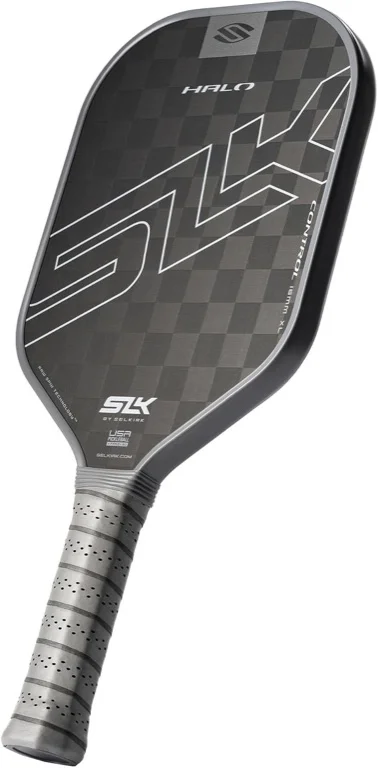
Verified specs: 7.7 oz, 4.25 inch grip (overgrip down to 4.125 works), swing weight ~109. 16 mm core, soft fiberglass-carbon hybrid face. $179 currently. Shop on Amazon.
What the reviews say: the Halo Control XL plays as soft as anything in the price band. The hybrid face dwells longer on the ball than raw carbon, which means dink and reset balls come off slower and a player can absorb pace without the paddle feeling stiff.
Pickleball Effect's tuning lab specifically calls out the Halo Control as a soft-face option for players managing elbow flare-ups. Reviewer consensus across Pickleball Studio, Pickleball Union, and Rackets and Runners is consistent on this point.
The tradeoff: less spin than a raw T700 face, less pop on drives. If your game is built on power, skip it. If you are coming back from elbow tendinopathy and need something that doesn't punish your forearm, this is the soft-face pick.
3. Vatic Pro Prism Flash (best lightweight, under 7.6 oz)
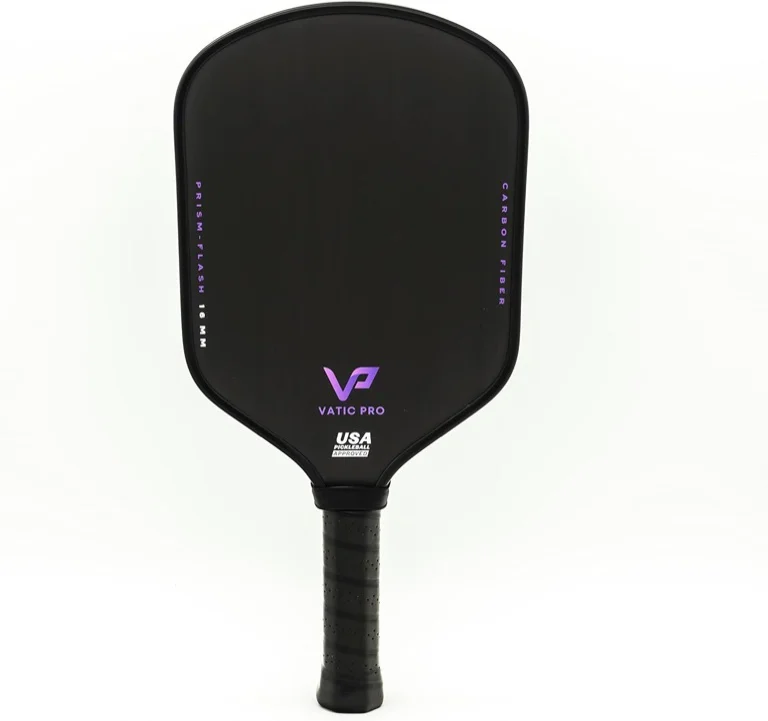
Verified specs: 7.5 oz, 4.125 inch grip, swing weight ~108 (Pickleball Studio). 14 mm thermoformed core, raw carbon face. $99. Shop on Amazon.
Specs first: this is one of the few sub-$100 paddles with a confirmed sub-110 swing weight and a 4.125 inch grip out of the box. Vatic Pro is a direct-to-consumer brand that sells without retailer markup, which is most of why a thermoformed paddle hits this price.
The honest read: Vatic Pro had QC issues in 2023 (cracking on the throat). The 2025-2026 batches show much fewer reports per the r/pickleball weekly gear threads. Treat this as a value pick with a calculated risk, not a benchmark pick. If you want light, fast, and cheap, the Flash is the paddle. If you want belt-and-suspenders reliability, go to the Bantam or Diadem.
4. Paddletek Bantam EX-L (best on a budget, under $100)
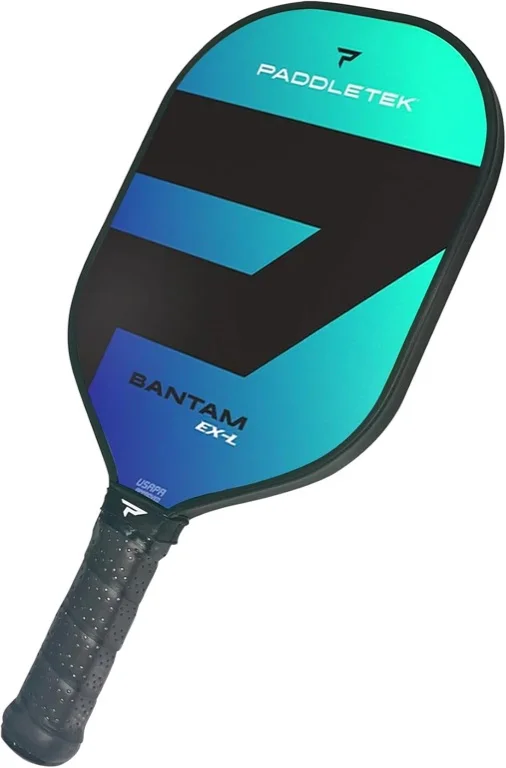
Verified specs: 7.6 oz, 4.25 inch grip (4.125 available on direct order from Paddletek), swing weight ~112. 13 mm polymer core, fiberglass face. $89. Shop on Amazon.
What the reviews say: not a premium paddle, and not pretending to be one. The fiberglass face gives noticeably less spin than carbon. The 13 mm core gives more pop than control. What you get for $89 is a paddle Paddletek has shipped in volume for years with reliable QC, a real warranty, and a swing weight that doesn't fight you per Pickleball Studio's measurement.
For a player still figuring out what they like, this is the right under-$100 paddle. You can play with it for six months, learn what you actually want in your second paddle, and not be out $200 on a guess. Paddletek will swap the handle to 4.125 if you call them. Most retailers don't mention it.
5. JOOLA Method 14 (best for power players)
Verified specs: 8.0 oz, 4.25 inch grip, swing weight ~115. 14 mm thermoformed core with foam injection, raw carbon face. $169. Shop on Amazon.
The Method 14 sits at the upper end of the swing-weight band recommended for this segment, and the 4.25 inch grip is not friendly to smaller hands without an overgrip swap. Why include it? Because some players in this segment want to drive. They want pop on a fourth-shot reset, they want to bang from the baseline against bigger opponents, and they don't want a control paddle apologizing for being a control paddle.
If you are a 4.0+ player in this segment with an aggressive style, the Method 14 is the paddle r/pickleball threads keep recommending. The thermoformed core and foam injection give it real plow-through without pushing the swing weight past 116. Get an overgrip in 1/16 inch reduction if your grip runs 4.125 or smaller. The handle length (5.5 inch) supports a real two-handed backhand.
6. CRBN 1X Truefoam Genesis (best premium pick, no ceiling)
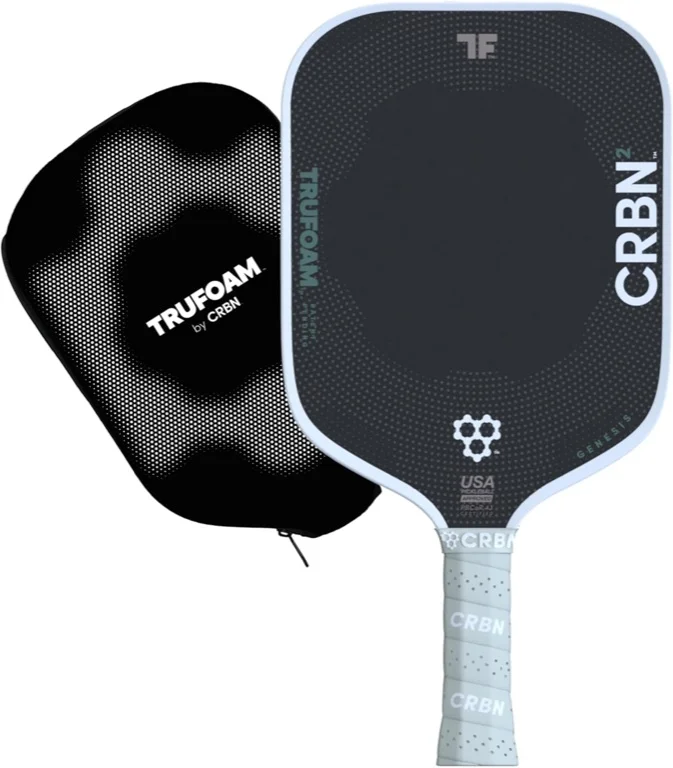
Verified specs: 7.9 oz, 4.125 inch grip available, swing weight ~113. 16 mm Truefoam core, raw T700 carbon face. $279. Shop on Amazon.
What the spec database shows: CRBN got the grip option right (4.125 from the factory), the swing weight sits in the playable range despite being a thermoformed elongated, and the twist weight comes in at 7.0 per Pickleball Studio, which is excellent for an elongated shape.
The tradeoff is the price and the shape. Elongated paddles have narrower sweet spots and reward consistent center-of-paddle contact. If you mis-hit off the tip frequently, a wide-body paddle will serve you better. If your contact is clean and you want premium build with a smaller grip, this is the no-ceiling option in the segment.
7. Diadem Vice (best for advanced women players)
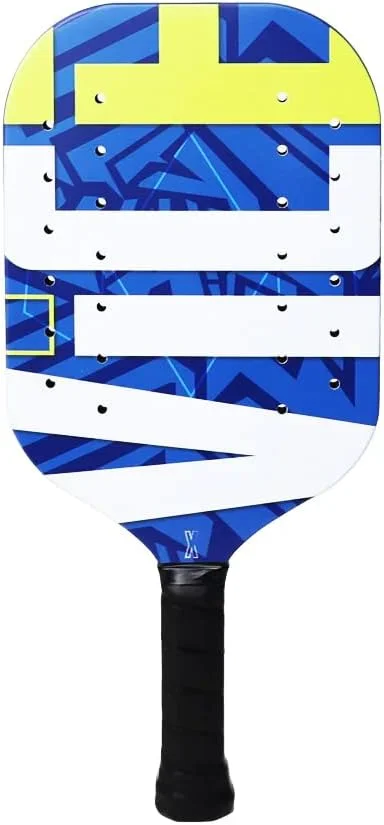
Verified specs: 7.8 oz, 4.0 inch grip (factory), swing weight ~114. 16 mm core, raw carbon face. $189. Shop on Amazon.
The 4.0 inch grip is the immediate standout: out of the box, not as a special order. The handle is on the longer side at 5.5 inches, so two-handed backhands work. Swing weight at 114 is borderline for the lighter-swing range per Pickleball Studio's measurement, but the balance is heel-loaded enough that reviewer consensus says it doesn't feel tip-heavy.
The Vice is the paddle for the player who has dialed in technique and wants a tournament-grade tool with a 4.0 inch grip. It will not forgive a beginner the way the Bantam will. It does demand and reward consistent contact. Pickleball Studio's review notes the spin number is among the highest in the segment for a 16 mm paddle.
8. Engage Pursuit Pro1 6.0 (honorable mention, control-leaning)
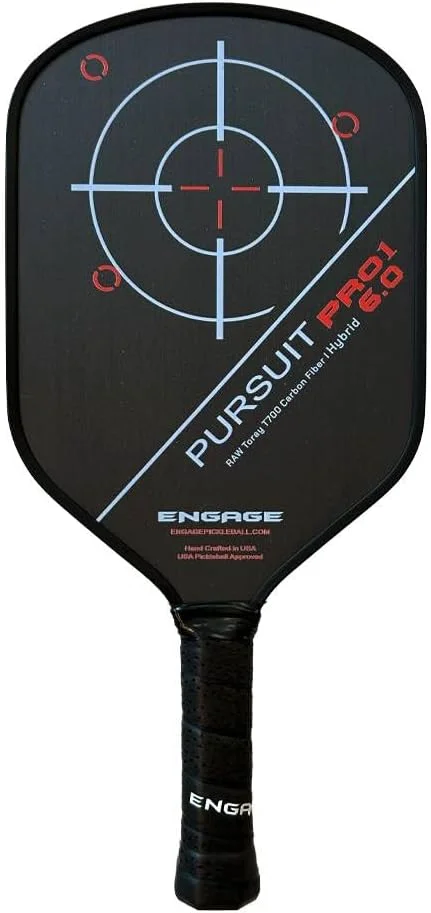
Verified specs: 7.7 oz, 4.125 inch grip, swing weight ~110. 16 mm core, fiberglass-graphite hybrid face. $149. Shop on Amazon.
Included because Pickleball Effect's fit quiz keeps recommending it for smaller-hand control players, and the spec sheet supports that read. The hybrid face is softer than raw carbon, which trades spin for dwell. The 110 swing weight is genuinely quick per the measured database. If the Halo Control XL is sold out (it often is), this is the next stop on the soft-face control list.
Comparison table
| Paddle | Total weight | Grip | Swing weight | Best for |
|---|---|---|---|---|
| Bread & Butter Mary Jane | 7.9 oz | 4.0 in | ~111 | Best overall under $150 |
| Selkirk SLK Halo Control XL | 7.7 oz | 4.25 in | ~109 | Tennis elbow / soft face |
| Vatic Pro Prism Flash | 7.5 oz | 4.125 in | ~108 | Lightweight under 7.6 oz |
| Paddletek Bantam EX-L | 7.6 oz | 4.25 in | ~112 | Budget under $100 |
| JOOLA Method 14 | 8.0 oz | 4.25 in | ~115 | Power players |
| CRBN 1X Truefoam Genesis | 7.9 oz | 4.125 in | ~113 | Premium / no ceiling |
| Diadem Vice | 7.8 oz | 4.0 in | ~114 | Advanced players |
| Engage Pursuit Pro1 6.0 | 7.7 oz | 4.125 in | ~110 | Soft-face backup pick |
Swing weights from Pickleball Studio's measured database. Grips from manufacturer published spec sheets. Verified April 2026.
What I'd skip
Paddles marketed as "designed for women" with pink graphics and no spec change. A few brands take a stock 4.25 inch grip, paint the edge guard pink, charge a $20 premium, and call it a women's paddle. The grip is the same. The swing weight is the same. You are paying for the paint. Skip it.
Anything under 7.3 oz with no published swing weight. Ultralight paddles get pushed to women players because they're "easier to swing." They are also twitchy, lose plow-through, and often have low twist weights that punish mis-hits. If a brand markets ultralight without publishing a swing weight number, assume they don't want you to see it.
Helios Supernova 14. I see this pushed in retailer banner ads as a women's pick. Pickleball Studio's measured swing weight comes in at 119, which is on the heavy end. The 4.25 inch grip is stock, no smaller option. Whatever the marketing says, the specs don't fit this segment.
Quick decision tree
If your pain is elbow flare-ups, pick the Selkirk SLK Halo Control XL. Soft face, low swing weight.
If your pain is fatigue by game three, pick the Vatic Pro Prism Flash or Paddletek Bantam EX-L. Sub-7.7 oz.
If your pain is a too-thick handle, pick the Bread & Butter Mary Jane or Diadem Vice. Both ship 4.0 inch grips.
If your pain is mis-hits not landing, pick the Bread & Butter Mary Jane or Diadem Vice. Twist weight 6.8+.
If your pain is paying $250 and worrying you wasted it, pick the Paddletek Bantam EX-L. Solid pick at $89.
If you want the upgrade you'll keep for two years, pick the CRBN 1X Truefoam Genesis or Bread & Butter Mary Jane.
Borrow a paddle from a friend before you buy. You'll learn more in ten minutes of actual play than in any guide, including this one. The right paddle is the one that disappears in your hand. Find that and ignore everything else. For more on the spec basics, see our paddle buying guide and best paddles under $100.
References
- Pickleball Studio paddle database · Measured swing weight, twist weight, and spin numbers (Chris Olson)
- Pickleball Effect fit quiz and tuning lab · Lab-tested face hardness and player-fit recommendations (Braydon)
- r/Pickleball weekly gear threads · Player consensus on QC, durability, and segment fit
- Bread & Butter Mary Jane spec sheet · Manufacturer grip circumference and core spec
- Diadem Vice spec sheet · Factory 4.0 inch grip and swing weight
- USA Pickleball approved paddle list · Equipment certification reference
Frequently asked
Tap a question to expand.

Reader notes on this guide
Sign in with your email to post. We do not run ad networks; comments are moderated for spam and abuse.
Loading comments...
Sign in to add a comment.