
Counterfeit pickleball paddles (2026): how to spot a fake, USAP authentication, and what to do if you bought one
By My Pickleball Connect Team 13 min read Last reviewed
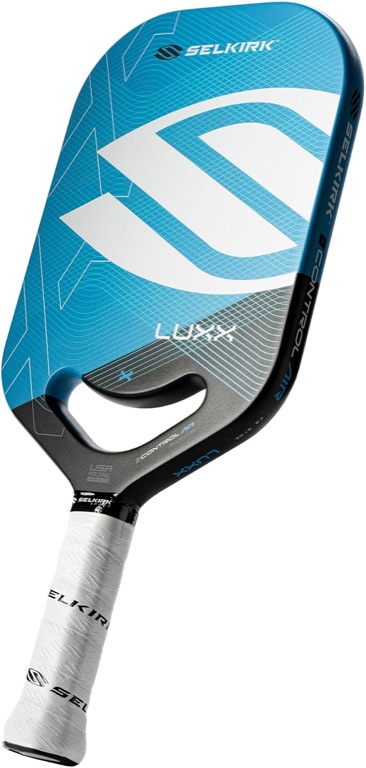
Counterfeit pickleball paddles are a real and growing problem in 2026. Fakes of major brands (Selkirk, JOOLA, CRBN, Paddletek, Bread & Butter, Six Zero) are showing up on Amazon Marketplace, eBay, Mercari, Facebook Marketplace, and overseas-shipped Aliexpress listings. The paddles look real in photos. They have brand logos. Some come in packaging that looks legitimate. The performance is the giveaway, and by the time you notice the gap, you're often past the return window.
This guide is the verification framework: how to spot a fake before you buy, how to authenticate after, what USAP and the brands do to enforce, and what your options are if you've been burned. We are not going to name specific counterfeit listings (those rotate weekly) but we are going to give you the structural tells that don't change.
Why this matters more in 2026
Three things changed in 2024-2026 that opened the counterfeit market wider than it had been:
- Premium-tier prices climbed. A Selkirk LUXX Control Air retails at $280; a JOOLA Perseus Pro IV at $230; a CRBN TruFoam Genesis at $280. The price gap between these and a $30 generic from a no-name brand is what makes the counterfeit math work for sellers. Fake the look, charge $80-120, pocket the margin.
- USAP delisting events. When USA Pickleball delists a paddle (the JOOLA Gen 3 line in mid-2024, several others under PBCoR enforcement in 2025), legitimate inventory gets cleared at deep discounts. That creates cover for counterfeit listings claiming to be "old stock" of delisted paddles. Buyers can't tell whether the paddle they're getting is legit-but-decertified or fake-and-decertified.
- Direct-to-consumer brands without retailer infrastructure. Spartus, Bread & Butter, Ronbus, 11six24, and Vatic Pro all sell direct without major retail distribution. That makes "is this listing real?" harder to verify; for these brands, anything not on the brand's own website is suspicious by default.
The verification framework: spotting fakes before you buy
1. Verify the seller, not the listing
The fastest authenticity check is the seller, not the product photo. For each major brand, the legitimate retailers are public:
- Selkirk: Selkirk.com (direct), Pickleball Central, JustPaddles, Pickleball Now, authorized clubs and pro shops. Selkirk's official authorized retailer list is published on their website.
- JOOLA: JOOLA.com (direct), Amazon (sold-by-JOOLA listings only), Pickleball Central, JustPaddles. Avoid Amazon listings sold by third-party "Marketplace" sellers using JOOLA names.
- CRBN: CRBNpickleball.com (direct), Pickleball Central, JustPaddles. CRBN sells primarily direct.
- Paddletek: Paddletek.com, Dick's Sporting Goods, Pickleball Central, JustPaddles, authorized pro shops.
- Bread & Butter: Direct only via the brand's own website. They have no authorized retail distribution at this writing. Any paddle from any other source is suspicious.
- Spartus: Direct only via gospartus.com. Same as Bread & Butter.
- 11six24: Direct via 11six24.com. The brand has no major retail authorized distribution.
- Six Zero: Direct via sixzeropickleball.com (US: us.sixzeropickleball.com), plus Pickleball Central with the 30-day risk-free trial.
- Ronbus: Direct via ronbus.com. No major retail distribution.
- Vatic Pro: Direct via vaticpro.com. No major retail distribution.
The rule of thumb: if the brand sells direct-to-consumer only, any paddle on Amazon Marketplace or eBay listed by a third-party seller is presumed counterfeit until proven otherwise. The risk is highest with Bread & Butter, Spartus, 11six24, Ronbus, Vatic Pro. There is no legitimate inventory of those brands sitting on third-party Amazon shelves.
2. Check the USAP approved equipment list
USA Pickleball publishes the official approved equipment list at equipment.usapickleball.org. Every legitimate paddle marketed for tournament play in the US is listed by exact model name. The list is updated when new paddles are approved or when delisting events happen.
For each model on the list, USAP publishes the brand, model name, USAP approval date, and (for some) the lab-test specifics. The model name on a real paddle should exactly match what's on the list. Counterfeit paddles often have model name variations (slightly different model numbers, ".Pro" instead of "Pro", added punctuation, etc.) because the counterfeiter is trying to avoid trademark direct match while staying close enough to fool buyers.
3. Compare prices to MSRP
Premium paddles do not go on sale at 50%+ off through legitimate retailers in 2026. Selkirk's, JOOLA's, and CRBN's authorized retailers run discount events for clearance, but the discount band is roughly 10-20% off MSRP. A Selkirk LUXX Control Air listed at $140 (50% off the $280 MSRP) on Amazon Marketplace is almost certainly a fake. The exception is genuine clearance of delisted paddles, but those listings are usually flagged as "decertified" or "tournament not approved" and come from reputable sources.
4. Read the seller reviews and return policy
On Amazon, scroll the seller's profile, not the product reviews. Counterfeit sellers often have:
- Recent account creation (under 6 months at time of listing).
- Inventory across unrelated categories (paddles, supplements, electronics, holiday decor).
- Generic store names like "Best Sport Equipment USA" rather than a recognizable brand or shop.
- Vague return policies, restocking fees, or "no returns on opened paddles."
5. Examine product photography
Counterfeit listings often use stock photos pulled from the brand's own marketing pages. Reverse-image-search the listing photo. If it appears on the brand's official site, that's a sign the seller doesn't have actual inventory of the product they're selling. Real third-party listings of authentic paddles usually have the seller's own photos showing the actual paddle they're shipping.
The performance tells: spotting fakes after delivery
If a paddle shipped and you're not sure, three categories of physical inspection separate fakes from real:
Weight and swing-weight tells
Real premium paddles ship within tight weight tolerances per their spec sheet. The JOOLA Perseus Pro IV is 8.0-8.3oz; the Selkirk LUXX Control Air is 8.3oz; the Bread & Butter Loco is around 8.0oz. Counterfeits often vary by 0.5oz or more outside the spec range because the counterfeiter is using cheaper materials with different densities (fiberglass instead of carbon, polypropylene cells without foam fill, etc.).
Use a kitchen scale. Compare the weight to the brand's spec page. A weight more than 0.3oz outside the published range is suspicious; more than 0.5oz outside is almost certainly a fake.
Face material and texture tells
Real raw carbon fiber on a 2026 premium paddle has a subtle textured pattern that you can feel with a fingernail dragged across the face. The grit is fine but consistent. Counterfeits often have:
- A painted-on grit texture that wears off in a few weeks (real raw carbon stays gritty for at least 3-6 months).
- Glossy face finishes where the real product has a matte raw-carbon finish.
- Visible weave inconsistencies in the carbon pattern (real Toray T700 carbon is uniform).
- Edge guards that don't match the brand's typical edge-guard style or color.
The Pickleball Studio Permagrit and HexGrit data we cite in our spin durability guide establishes typical RPM ranges for real raw carbon (around 2000-2200 RPM new). If your paddle's spin output looks meaningfully below that range and it shouldn't be, that's a possible counterfeit signal.
Construction tells
Look at the paddle in good light:
- Real foam cores (Loco, Spartus P1, Vatic V-Sol, Black Opal) have an even sound when you tap the face with a knuckle. Fakes often produce a hollow, tinny sound because the core is generic polymer with no foam ring.
- Real thermoformed paddles (Selkirk LUXX, JOOLA Pro IV) have an unbroken outer shell where the face wraps around the edge. Fakes often have a glued seam where the shell meets the edge guard.
- Real edge guards are precisely fitted with no glue squeeze-out or asymmetric gaps. Fakes show inconsistent edge-guard alignment, especially at the throat.
- Real handle pallets are press-fit and don't twist or shift under hand pressure. Fake handles often have visible seams or feel loose under torque.
Brand authentication services
Some major brands offer post-purchase authentication. As of 2026:
- Selkirk offers a serial-number-based registration program through Selkirk.com. Real LUXX, Power Air, and Vanguard paddles ship with serial numbers etched into the throat that can be verified on the brand's authentication portal. If your serial doesn't validate, contact Selkirk directly. Selkirk has been actively pursuing counterfeit takedowns on Amazon and eBay since 2023.
- JOOLA ships premium paddles (Pro IV, Pro V, 3S) with hologram authenticity stickers and serial numbers. The hologram should be embedded in the throat area, not stuck on the face. Verify against JOOLA's customer support if you're unsure.
- CRBN includes hologram serial-number stickers on TruFoam-line paddles. Check that the sticker has the embossed CRBN logo when held at an angle.
- Paddletek offers warranty registration through a serial-number portal that effectively doubles as an authentication check.
- Bread & Butter, Spartus, 11six24, Ronbus, Vatic Pro are smaller direct-to-consumer brands without formal authentication services. Your protection is buying directly from the brand's website. Period.
USAP enforcement and what they actually do
USA Pickleball maintains the official approved equipment list and runs the certification program, but they are not a counterfeit enforcement agency. Their role is approving paddles for sanctioned play, not policing whether a given physical paddle in your bag is the real version of a listed model. Counterfeit enforcement falls primarily on the brands themselves (through trademark lawsuits) and on the marketplaces (Amazon's Brand Registry, eBay's VeRO program).
What USAP does do that's relevant:
- Public list of approved models. Use it to verify the model name matches.
- Delisting announcements when paddles fail recertification. Posted on usapickleball.org. Real paddles sometimes get delisted; counterfeit paddles were never on the list to begin with.
- Tournament referee enforcement. If a tournament requires USAP-approved paddles and your paddle isn't on the list (whether because it's counterfeit or because it's a paddle from a brand using UPA-A only), you'll be asked to use a different paddle.
What to do if you bought a fake
Step 1: Document the paddle
Photograph the paddle on a scale, photograph the throat (where serial numbers and authentication stickers usually are), photograph the edge guard alignment, and photograph any packaging or shipping label you still have. These will support your refund claim.
Step 2: Contact the seller first
If you bought through a third-party Amazon Marketplace seller, request a refund through Amazon's A-to-z Guarantee with the documentation. Amazon's program covers counterfeit goods explicitly. eBay has a similar Money Back Guarantee. PayPal Buyer Protection covers most direct-to-seller payments.
Step 3: Report to the brand
Selkirk, JOOLA, CRBN, and Paddletek have customer service email addresses for counterfeit reports. Send your photos and the seller information. The brands aggregate these reports for marketplace takedown requests. You typically don't get a replacement paddle from the brand directly (you got refunded by the marketplace), but your report helps remove the listing for the next buyer.
Step 4: Report to the marketplace
Amazon, eBay, and the other marketplaces have counterfeit reporting flows in their help center. Your refund is one outcome; the listing removal is another. Both matter for protecting the next buyer.
Step 5: If the marketplace fails: chargeback
If the seller refuses, the marketplace fails to refund, and you paid by credit card, dispute the charge with your card issuer for "merchandise not as described." Counterfeit goods are a covered category under most credit-card chargeback policies. This typically works when the marketplace process doesn't.
Honest framing on this category
Most counterfeit pickleball paddles are not catastrophic. They look like the real thing, they play badly enough that you'll know within a week, and they get returned for refund successfully most of the time. The bigger cost is the time you wasted on a paddle you can't actually use, and the frustrating experience of trying to figure out whether the paddle you have is real.
The single most important risk-reducer is buying from the brand directly or from a known authorized retailer. The premium paddles in our review lineup (the Selkirk LUXX Control Air, JOOLA Pro IV, Bread & Butter Loco, Spartus P1 Hybrid, Six Zero Black Opal, Ronbus Quanta, 11six24 Vapor Power2, Vatic Pro V-Sol) all link to the actual brand pages where they sell direct. We don't link to third-party Amazon listings of the direct-to-consumer brands because those listings are mostly counterfeits.
What to do at the store / before checkout
- Verify the seller is the brand or a known authorized retailer.
- Check the model name against USAP's approved list.
- Compare price to MSRP. More than 30% off premium paddle MSRP is a flag.
- Read the seller's return policy. "All sales final" or "no returns on opened paddles" is a flag.
- If buying from Amazon, check whether it's "Sold by [Brand]" or "Sold by [Marketplace seller]." For DTC brands, only the brand-direct listing is safe.
Where this fits in our coverage
This guide complements our paddle-buying framework: how to choose a pickleball paddle for the spec axes, best foam pickleball paddles 2026 for the buyer's-tier picks across our reviewed lineup, state of pickleball paddles 2026 for the broader market context including direct-to-consumer pricing trends. For tournament-eligibility specifically, banned pickleball paddles 2026 covers the delisting timeline.
References
- USA Pickleball approved equipment list · Authoritative model-name lookup for tournament eligibility
- USA Pickleball equipment standards · Certification process and testing protocols
- Selkirk anti-counterfeit page · Brand authentication portal for Selkirk paddles
- JOOLA paddle authentication · Customer service contact for serial-number verification
- Amazon A-to-z Guarantee for counterfeits · Buyer-protection program covering counterfeit goods
- eBay Money Back Guarantee · Buyer-protection program for marketplace purchases
Frequently asked
Tap a question to expand.

Reader notes on this guide
Sign in with your email to post. We do not run ad networks; comments are moderated for spam and abuse.
Loading comments...
Sign in to add a comment.