
Pickleball skill levels explained: 2.0 to 5.0+
By My Pickleball Connect Team 7 min read Last reviewed
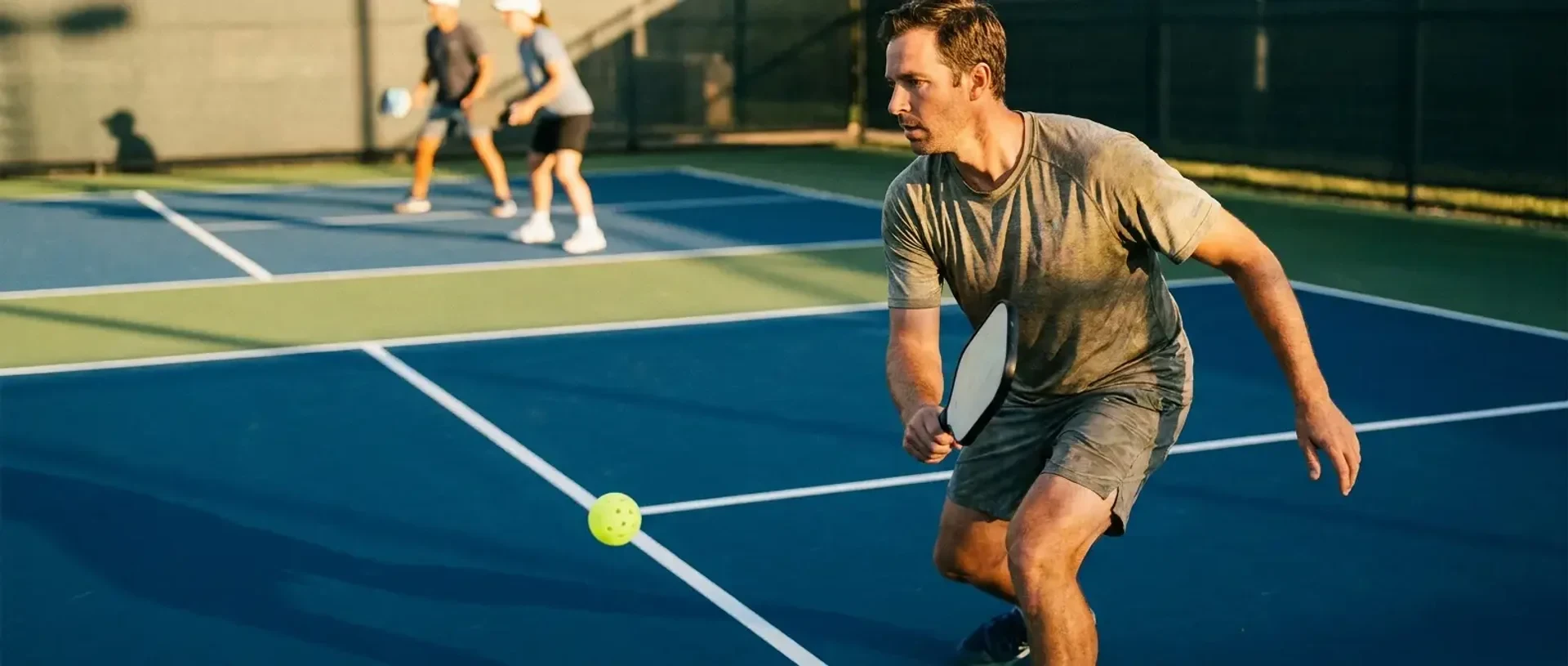
If you've ever shown up to a "3.5+ open play" and wondered whether you belonged there, this is the guide I wish someone had sent me. Here's what each rating actually looks like on a court, no jargon.
Why ratings exist
Open play is a lot more fun when the games are close. A 3.0 against a 4.5 is miserable for both of them. Ratings are shorthand for "you should get competitive games here."
2.0: Brand new
You know the rules. You can hit forehands, sort of. Serves land in the box most of the time. The soft game is still a mystery, so every shot is a hit-it-hard shot. That's fine. Every 5.0 started here.
2.5: Getting a rhythm
You're consistent on mid-court forehands and flat backhands. Serves are reliable. The two-bounce rule is automatic. You still hit most dinks too hard.
3.0: The "I know what I'm doing" band
Dinks stay in the kitchen most of the time. You can sustain a four-shot dink rally. Third-shot drops are hit and miss, literally. Your partner's positioning is starting to matter to you. This is where most recreational open play happens.
3.5: Intentional shot selection
You're choosing between a drop and a drive based on what you see. You can reset pace under pressure. Your serve has variety (lob, drive, slice). You know where to stand after a third-shot drop.
4.0: Clean mechanics under speed
Resets under fire are reliable. You have a weapon of your own: a topspin forehand, a crisp backhand volley, a nasty spin serve. You read opponents' patterns. You don't lose points from unforced errors in most rallies.
4.5: Tactical play
Every shot is intentional. You can redirect pace without winding up. Stacking, poaching, and shake-and-bake are in the playbook. You hit your spots.
5.0 and above: Tournament-caliber
A small slice of the rec population. Elite ball control, physical conditioning, and match IQ. Plays in sanctioned tournaments. Usually has a formal DUPR or UTR-P rating.
How to self-rate honestly
Take your best guess, subtract 0.5, and start there. Most players rate themselves half a point to a full point above where the community would rate them. It's not vanity. We just notice our best shots more than our 20 missed dinks.
DUPR, UTR-P, and USAP ratings
USAP (USA Pickleball) ratings are the traditional skill ladder (2.0, 2.5, 3.0…). Self-reported or tournament-earned.
DUPR is the newer global rating system backed by the PPA. It's a single number, like 3.47, updated after every match you log. Most serious open play uses DUPR now. We have a full breakdown of how DUPR works, including reliability, decay, and how brackets actually use it.
UTR-P is Universal Tennis Rating's pickleball variant. Niche.
For rec play, use USAP self-rating. For leagues or tournaments, get on DUPR. Stuck at 3.0? Our guide on breaking out of 3.0 to 3.5 covers what actually changes between the two levels.
References
- DUPR Rating Methodology · Dynamic, head-to-head match-based rating, 2.0 to 8.0+ scale
- USA Pickleball Player Skill Rating Definitions
- UTR Pickleball (UTR-P)
Frequently asked
Tap a question to expand.

Reader notes on this guide
Sign in with your email to post. We do not run ad networks; comments are moderated for spam and abuse.
Loading comments...
Sign in to add a comment.