
How to break out of 3.0: what separates 3.5 players and how to make the jump
By My Pickleball Connect Team 10 min read
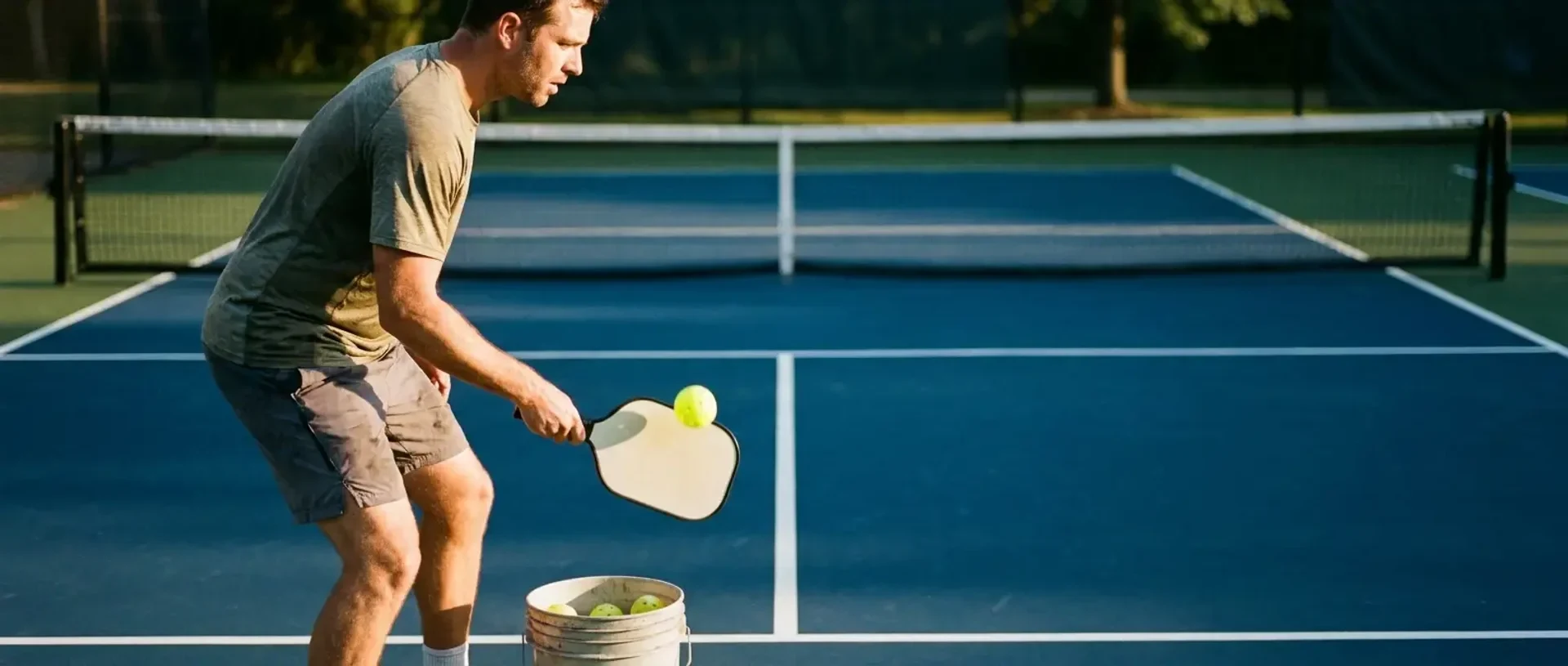
If you can rally, serve in, and hit a recognizable forehand, you are probably a 3.0. The USA Pickleball rating descriptions put it plainly: a 3.0 hits medium pace shots with limited directional intent, sustains a basic dink rally with limited control, and avoids the backhand when possible.
Most rec players get here within their first six to twelve months and then stay for years. The plateau is real because the things that move you up are not the things that got you here.
You did not break 3.0 by hitting harder, and you will not break out of it that way either.
What separates a 3.5 from a 3.0
The official USA Pickleball gap between 3.0 and 3.5 sounds small on paper. A 3.0 sustains a basic dink rally. A 3.5 sustains medium length rallies with moderate control of height and depth, places a high majority of serves and returns with varied depth, and starts identifying which balls are attackable. That subtle wording hides the actual gap on court.
The concrete differences:
- Backhand reliability. A 3.0 runs around backhands. A 3.5 dinks and resets off the backhand without popping it up. This single skill changes everything because skilled opponents will target your backhand on purpose.
- Return depth. A 3.0 gets the return in. A 3.5 lands it in the back third of the court so the serving team cannot step up and crush a third shot. A return that lands mid-court is the most expensive shot at this level.
- Third shot purpose. A 3.0 hits a generic medium pace third. A 3.5 picks between a drop and a drive based on the return they got, then moves forward with the ball.
- Court position. A 3.5 owns the kitchen line as a couple. A 3.0 hangs back, lingers in the transition zone, or arrives at the line one step behind their partner.
- Shot tolerance. A 3.0 ends rallies fast, often by missing. A 3.5 is willing to play eight, ten, fifteen balls in a dink rally and waits for a real opening.
Where 3.0 players actually lose points
If you film yourself for a session and watch it back, the same patterns will repeat. These are the recurring leaks at 3.0:
- Returns landing short. The serving team gets a knee-high ball at mid-court and drives a winner before you have set up.
- Third shots into the net or sitting up at chest height. The arc is wrong. Either too flat and clipped low, or too high and crushed.
- Standing in no-man's-land. You hit a third shot from seven feet behind the baseline, watch it, and get caught between the baseline and the kitchen on the next ball.
- Popping up dinks. Especially the backhand dink, especially when the ball is at your feet, and especially when you reach instead of moving your feet.
- Speeding up the wrong ball. Attacking a low, short ball that is below the net height is a free point for your opponents.
- Hitting balls that were going out. Anything shoulder height at the baseline is usually long. Letting it go is a 3.5 habit.
- Going for winners that are not there. A 3.0 wins points off opponent errors, not winners. Trying to end the rally on shot two or three usually ends it for you.
Five drills that actually move the needle
1. The 50-ball drop drill
Stand at the baseline with a hopper or a partner feeding. Bounce-feed yourself if you are alone. Hit fifty third-shot drops aimed at landing in the kitchen. Do not score them by left-right placement. Score them by arc and landing zone.
The goal is thirty out of fifty in the kitchen before you change anything else. A relaxed grip pressure, somewhere around three out of ten, and a low-to-high swing path through the ball matter more than power. After every made drop, take two steps forward as if it were live.
The footwork has to be linked to the shot.
2. Crosscourt dinking with a backhand-only round
Get to the kitchen line with a partner. Dink crosscourt for five minutes forehand to forehand. Then switch sides so both of you are dinking with backhands only for five more minutes. Most 3.0 players have never hit a hundred backhand dinks in a row.
The point is not to win, it is to stop avoiding the shot. Aim for the kitchen line, not deep into the kitchen, and keep your paddle out in front rather than dropping it to your hip.
3. Drive, drop, reset
Partner at the kitchen line. You at the baseline. You hit a drive third, then your partner blocks it back at your feet in the transition zone, then you reset softly into the kitchen and step in. Cycle.
This drill teaches you the most ignored shot in the 3.0 game: the soft reset from the transition zone. Aggressive players try to attack from mid-court and pop up. The reset is the way out. Keep your paddle in front, soft hands, and a quiet body.
The ball should land in the kitchen with no pace.
4. Return depth targets
Lay two paddles, towels, or cones across the back three feet of the court. Have a partner serve ten balls. Score one point for any return that lands behind the line, zero for anything short. Aim for seven out of ten. Then add the next constraint: every return must be followed by you running to the kitchen line before the third shot is hit. A deep return without forward movement is half a return.
5. Hands battle from the kitchen
Both players at the kitchen line, four feet apart at first, then full width. Start with a cooperative dink, then anything is live. Play out the point. Reset short low balls. Attack only on balls above net height. The drill teaches two things at once: you learn to keep your paddle up in front of your chest in a ready position, and you learn which balls are actually attackable versus which ones look attackable but are not.
For the full structured drill catalog (cooperative warmups, third-shot machines, transition resets, live-ball games), our partner drills guide walks through the whole hour. The reset shot guide goes deeper on the absorbing-pace mechanic that keeps showing up in these drills, and the footwork guide covers the split step and transition-zone movement that's quietly half the work.
Mental and pattern shifts
The drills get you the tools. The mental work decides whether you use them.
- Pick your shots based on the ball you got, not the shot you wanted. If the return is deep and at your feet, the third has to be a drop. If the return floated and is sitting up at waist height inside the baseline, drive it. Choosing the wrong shot for the ball is the most common 3.0 unforced error.
- Default to the soft game when in doubt. If you cannot decide whether to attack or reset, reset. The cost of a popped-up reset is a defensive ball. The cost of a missed attack is the point.
- Hit through the contact, not at it. Two of the biggest mechanical leaks at 3.0 are tight grip pressure and pulling off the ball before contact. Both come from anxiety, not technique.
- Stop trying to hit winners. Try to hit the next ball. The 3.5 mindset is shot tolerance. Better players will not give you free points, so you stop manufacturing them for yourself.
- Get lower. A taller stance is a slower stance. Bend your knees on every dink and every reset. If your back hurts after a session, you were probably standing up too straight.
Realistic timeline and how to track progress
If you play three to four times a week and drill for at least one of those sessions, the 3.0 to 3.5 jump usually takes six to twelve months. Players who only play games and never drill can sit at 3.0 indefinitely. The most consistent piece of advice from players who made the jump is that they stopped chasing wins in rec games and started treating practice as practice.
Track yourself with real data, not vibes. DUPR (Dynamic Universal Pickleball Rating) is the most useful tool. It updates within about 24 hours of a posted result, factors in score margin and opponent strength rather than just wins and losses, and weights recent matches more heavily than old ones.
You need around twenty match results for the rating to settle, so feed it consistently. A 3.0 player typically lives in the 3.0 to 3.249 DUPR range, and a 3.5 in the 3.5 to 3.749 range, though DUPR uses a continuous scale rather than half-point bands.
Other markers that you are progressing:
- You are getting your serves and returns in deeper without thinking about it.
- You can hold a fifteen-ball dink rally without panicking.
- You can play a backhand dink without flinching.
- Your partners stop telling you to come up to the line, because you are already there.
- You start losing close matches to 3.5 players instead of getting blown out.
When you can do all five and your DUPR has crept above 3.3, sign up for a 3.5 league or a sanctioned tournament at 3.5. Losing matches at the next level up is the cheapest, fastest feedback you can get.
Most players who break the plateau report the same thing: they stopped trying to look like a 3.5 and started doing the boring work that 3.5s actually do.
Two more pieces that compound in the year you spend at this transition: the mental game (handling tournament nerves, the between-points routine) and filming and reviewing your matches (cheap, brutal, fast).
Frequently asked
Tap a question to expand.
How long does it really take to go from 3.0 to 3.5?
Should I take lessons or just play more?
What is the single biggest difference between 3.0 and 3.5?
Is it cheating to play down to keep my DUPR high?
Read next
- Playing Well
Is stacking in pickleball snobby? No. It is optimization. Snobbery is a separate, fixable problem.
- Playing Well
The 4-week third-shot drop drill plan: 12 drills, measurable benchmarks, and the partner pattern that installs the shot for good
- Playing Well
The 4-week pickleball reset drill plan: 12 drills, measurable benchmarks, and the partner pattern that breaks the popup-attack-popup spiral

Reader notes on this guide
Sign in with your email to post. We do not run ad networks; comments are moderated for spam and abuse.
Loading comments...
Sign in to add a comment.