
Best pickleball shoes (2026)
By My Pickleball Connect Team 9 min read Last reviewed

Of every piece of pickleball gear, shoes are the one item coaches and sports PTs consistently tell beginners not to skimp on. Paddles you can swap. Balls you go through anyway. Shoes are the one thing where the wrong choice puts you on the sideline with a rolled ankle or sore knees by month two.
This is a 2026 buying guide built around what pickleballers are actually wearing on courts right now and which model fits which kind of player. No first-person reviews of shoes I have not played in. Just specs, fit reputation, and clear use-case picks.
Why court shoes matter
Pickleball is a side-to-side sport. You shuffle laterally to cover dinks, plant hard to push off for a drive, stop short to reset a speed-up. Three things make a court shoe a court shoe, and they all serve that motion.
- Lateral support. Reinforced sidewalls and a wider, flatter platform keep your foot on top of the shoe when you cut. Running shoes have soft, narrow platforms designed to roll forward. On a hard cut, your foot slides off the footbed and you roll an ankle. This is the single biggest reason ankles get hurt at open play.
- Stiffer outsole and midsole. Court shoes use denser EVA and harder rubber compounds so your push-off energy goes into the ground, not into a soft squish. Running shoes are tuned for forward gait. That softness becomes instability when you change direction.
- Lower heel-to-toe drop. Most court shoes sit between 4 mm and 8 mm. Running shoes are commonly 8 mm to 12 mm. A lower drop keeps your weight centered over the forefoot, where you load before a lateral push.
Why running shoes are a hard no
I know they feel comfortable. I know you have a pair in the closet. They are still the wrong tool. The sole is built to roll heel to toe and absorb a soft forward landing. The upper is light and flexible.
None of that helps when you push hard off your outside foot to chase a ball. The shoe deforms under that load and your ankle moves farther than your shoe wants. That is how lateral ankle sprains happen, and they are the most common pickleball injury after pickleball elbow.
Running shoes also wear unevenly fast on a hard court. The soft outsole chunks off, the toe gets shredded by drag steps, and the cushion compresses where it was never meant to be loaded. Our injury-prevention guide covers what the data actually shows, and shoes are most of that conversation.
Indoor vs outdoor: the gum-sole question
Same shoe for indoor and outdoor? No. The outsole is the difference.
Indoor courts are wood or polished sport floor. They want a soft, gummy rubber outsole that grabs the surface. Indoor or "court" shoes designed for volleyball, badminton, and indoor tennis carry this. Asics Sky Elite and many Mizuno models live here. Gum soles wear out fast outdoors, sometimes in a single session on rough concrete, so do not cross them over.
Outdoor courts are concrete or asphalt with cushioned pickleball coatings. They want a harder, more durable rubber with deeper tread. The K-Swiss Hypercourt line and Asics Gel-Resolution are the archetypes. The herringbone-style tread digs into the textured court paint and does not chunk off the way a soft compound would.
If you split your time between both, own two pairs. Our indoor vs outdoor guide covers the rest of the surface differences.
The brands and models pickleballers actually wear
This list is not based on me wearing every shoe. It is based on what shows up on courts, what dedicated pickleball-shoe reviews from gear-focused sites consistently rank, and what the major brands are positioning for 2026. Specs and fit reputation, not fabricated test sessions.
K-Swiss Hypercourt Express 2 and Hypercourt Supreme
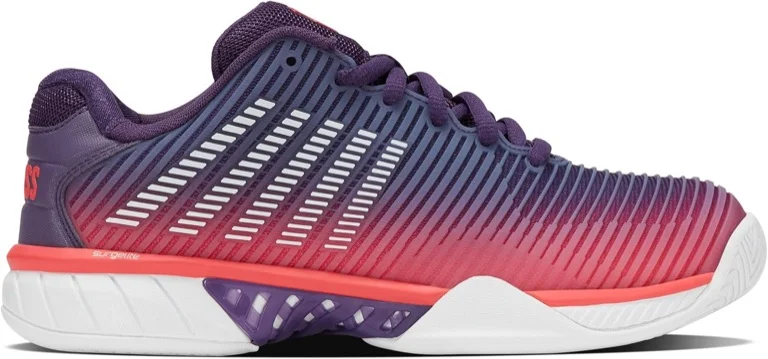
The Hypercourt Express 2 shows up more often than any other shoe at outdoor open play in the US. Around $100 to $130 retail, often lower on sale. Durable rubber outsole, classic tennis-shoe last, six-month outsole warranty from K-Swiss on most colorways. Fit runs on the wider side, true to size. Shop on Amazon.
The Hypercourt Supreme is the upgraded sibling. More cushion, better midfoot lockdown, slightly heavier. If you play four or more times a week and want something that lasts longer than the Express, it is the upgrade. Shop on Amazon.
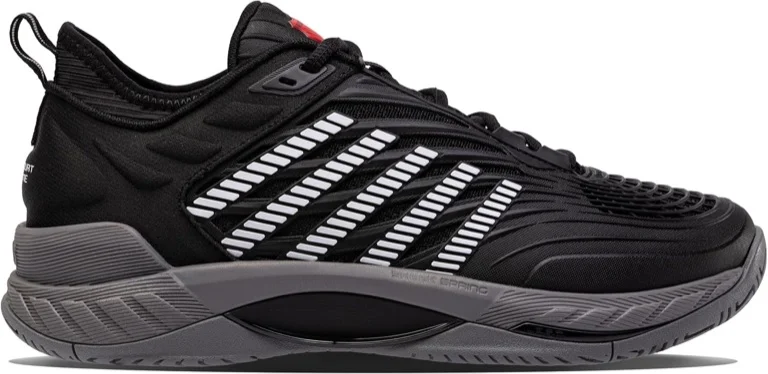
Asics Gel-Resolution and Court FF
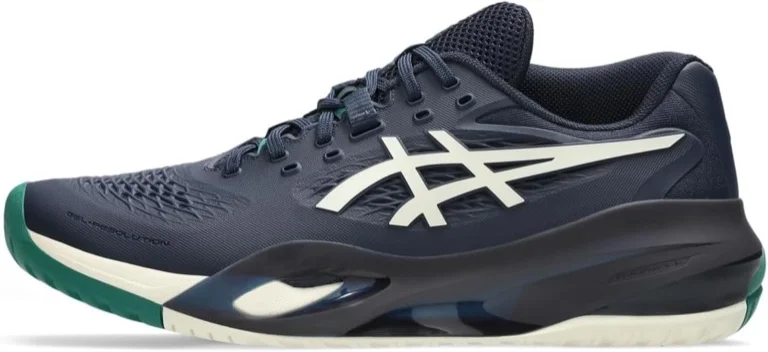
Asics has the deepest tennis pedigree here and it shows on court. The Gel-Resolution (currently 9, with a 10 expected during 2026) is built for heavy lateral movers and is the shoe a lot of former tennis players migrate into. Stable, durable, with a stiff shank that loads well on push-offs. Fit runs slightly narrow. Shop on Amazon.
The Court FF (Court FF 3 in 2026) leans lighter and quicker. Better for players who already move well and want speed over maximum stability. The most agile shoe Asics makes for court sports right now. Shop on Amazon.
NikeCourt
NikeCourt covers two model families pickleballers wear: the Air Zoom Vapor (Vapor Pro 3 in 2026) and the Zoom GP Challenge. Vapor Pro is a quick, low-profile shoe for players who like a snug, race-fit feel. The GP Challenge is a more cushioned, more stable option. Nike runs narrower than K-Swiss across the board, so size up if you are between.
Babolat Jet Mach 3
Babolat crossed into pickleball with the Jet Mach line. Lightweight, breathable, with a Michelin-rubber outsole that holds up well outdoors. Medium width, snug through the heel. Often $130 to $150.
Skechers Viper Court Pro
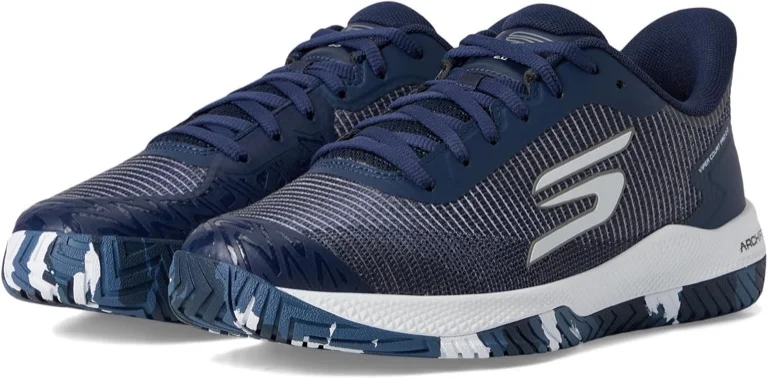
Skechers has pushed hard into pickleball with sponsorships and a dedicated line. The Viper Court Pro is the most-worn model. Memory-foam insole, lightweight, with the cushioned ride Skechers is known for. Wider fit than most options here, which makes it strong for broad feet. Trade-off: the cushion softens noticeably faster than a K-Swiss or Asics outsole. Around $120. Shop on Amazon.
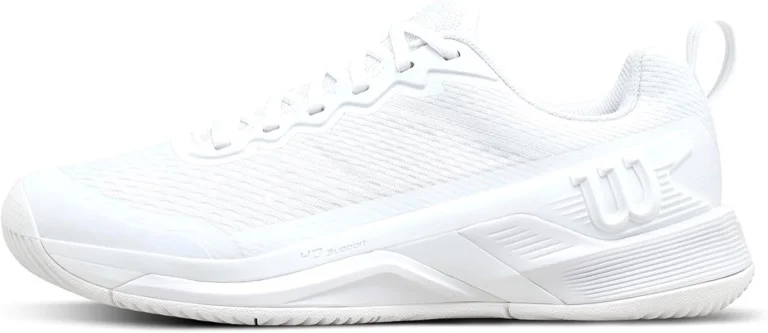
Wilson Rush Pro
The Rush Pro (currently 4.5, 5.0 rolling in during 2026) is Wilson's all-court tennis shoe and one of the most balanced picks for pickleball. Solid lateral support, a stiff but not punishing midsole, an outsole pattern that handles both surfaces decently. Medium fit, true to size. The do-everything pick. Shop on Amazon.
Senior and joints-friendly picks
If you are over 60, recovering from a knee or ankle issue, or just hard on your joints, the priority shifts to maximum cushion and lateral support. The trade-off is weight. A more protective shoe is a heavier shoe.
The Asics Gel-Resolution is the most-recommended option in this category. The Gel inserts in the forefoot and rearfoot are the most aggressive cushioning system in any major court shoe, and the lateral chassis is some of the most stable on the market.
The K-Swiss Hypercourt Supreme is a strong second. More cushion than the Express 2, more midfoot lockdown, the wider, forgiving last K-Swiss is known for.
The Skechers Viper Court Pro lands here too for plush-cushion priority, with the trade-off that you replace it more often. Our guide to pickleball for seniors covers how shoes fit into a broader joint-friendly approach.
The barefoot/zero-drop alternative
Most shoes above sit at 4 to 8 mm of heel-to-toe drop with structured midsoles and reinforced sidewalls. There is a contrarian camp in pickleball that goes the other way: zero-drop, foot-shaped court shoes with thin, flexible soles. Brands like Xero Shoes, Vivobarefoot, and Lems play here.
Full disclosure: I use the Xero Rally personally. Zero drop, wide toe box, thin sole, the feel is much closer to playing in your bare feet than any of the structured options above. The trade-off is real: less impact protection, less lateral chassis, more demand on your own foot strength. Players who already do barefoot training, who have wide feet, or who feel locked-in by traditional court shoes often prefer the feel.
Do not jump straight into a barefoot court shoe if you have never worn one. The transition wants weeks, not days. Lateral push-offs feel different and your feet need to be strong enough to do the work the structured shoe was doing for you.
For most rec players, especially anyone over 50, the conventional picks above are the safer first call. But if you are already in barefoot shoes day-to-day, the Xero Rally is the most court-ready barefoot option I have come across.
How often to replace your shoes
Every 300 to 500 hours of play. For someone playing three times a week for two hours, that is six to ten months. For daily players, four to six.
Three signals yours are done before the calendar mark:
- The outsole tread is smoothed flat at the toe and ball of foot. A glassy patch means you have lost traction on lateral cuts.
- Visible midsole compression on the lateral side. Look at the shoe from behind. If it leans or the foam is creased and gray on the outside edge, it is not supporting you on cuts.
- New knee, ankle, or hip pain. Aches that show up without a twist or fall are usually your shoes telling you they are dead. Replace before you sprain something.
Who should buy what: picks by use case
Rec outdoor player, two to four times a week
K-Swiss Hypercourt Express 2. Best balance of price, durability, and lateral support for the most common use case in the sport. The six-month outsole warranty is genuinely useful at this volume.
Rec indoor player
An indoor-specific gum-sole shoe. Asics Sky Elite, Mizuno Wave Lightning Z, or Nike Hyperace are the volleyball-court shoes most pickleballers wear on indoor wood floors. Do not bring them outside.
League and tournament competitor
Asics Gel-Resolution or Court FF, K-Swiss Hypercourt Supreme, or NikeCourt Vapor Pro. Three to five sessions a week plus tournaments demands a more durable shoe than the entry-level pick. Heading into an event? Our tournament packing list covers everything else worth bringing.
Senior or anyone with knee or ankle history
Asics Gel-Resolution first, K-Swiss Hypercourt Supreme second. Skechers Viper Court Pro if cushion is the priority and you do not mind replacing sooner.
Value pick
K-Swiss Hypercourt Express 2 on sale, often $80 to $90 in last-season colorways. The best dollar-per-hour shoe in pickleball right now.
Wide-footed player
Skechers Viper Court Pro or K-Swiss Hypercourt Express 2 in their wider sizing. Avoid Nike and Babolat. Asics in 2E width if you can find it.
The short version
Get court shoes. Match the outsole to your surface: gum rubber for indoor, durable rubber for outdoor. Pick the model above that fits your foot shape and weekly volume. Replace every 300 to 500 hours, sooner if your knees start talking. Two pairs if you split surfaces.
Socks matter too, and the rest of the kit is in our clothing and apparel guide. The first pair you buy in this sport will save you more than any paddle upgrade in your first two years.
References
- K-Swiss Hypercourt Outsole Warranty · Six-month outsole warranty referenced on most Hypercourt colorways
- Asics Tennis and Court Shoe Lineup · Gel-Resolution, Court FF, and Solution Speed FF specs and width options
- USA Pickleball Equipment and Apparel Guidance · USAP-published guidance on appropriate court footwear
- Wilson Tennis Shoe Collection · Rush Pro and other all-court tennis shoes used widely in pickleball
- Skechers Viper Court Pro Product Line · Skechers pickleball-specific footwear line
Frequently asked
Tap a question to expand.

Reader notes on this guide
Sign in with your email to post. We do not run ad networks; comments are moderated for spam and abuse.
Loading comments...
Sign in to add a comment.