
Pickleball serve rules (2026): what changed and what referees actually call
By My Pickleball Connect Team 5 min read Last reviewed
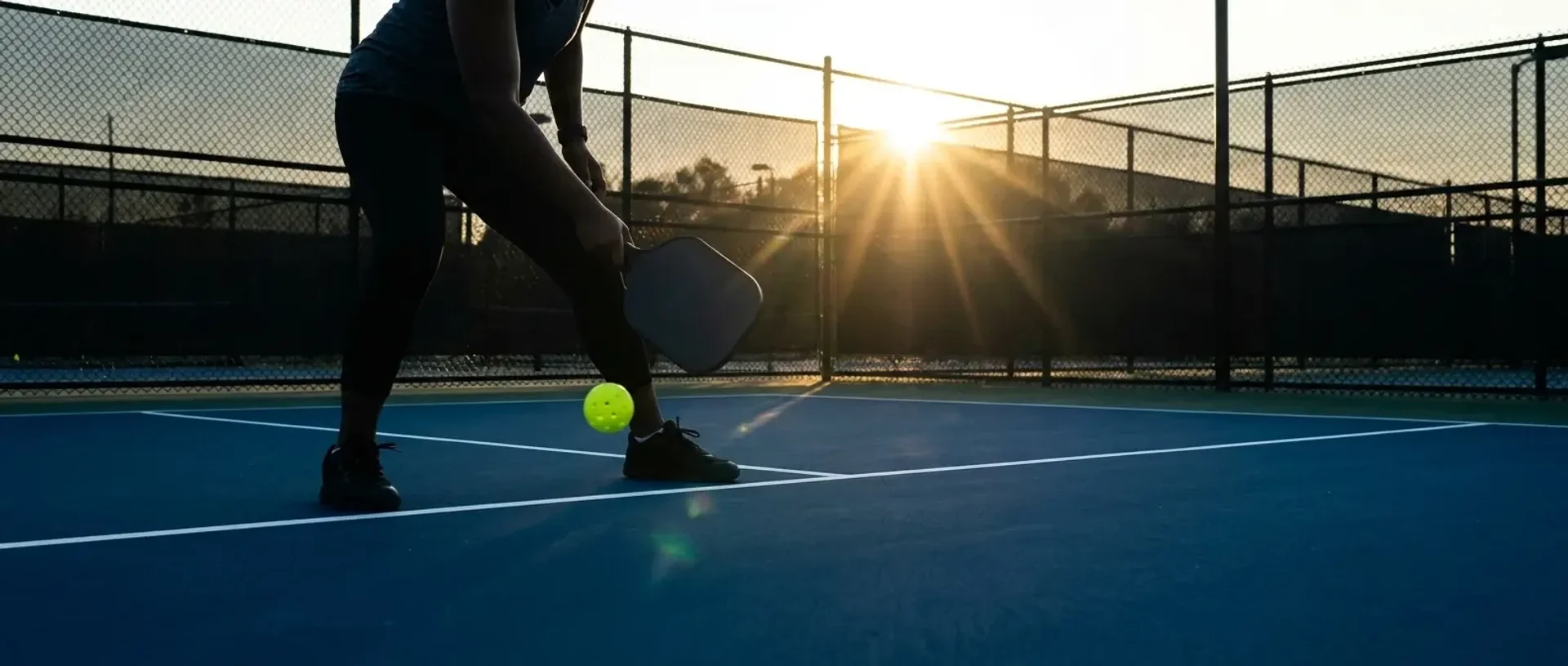
The 2026 USA Pickleball rulebook tightened the serve language in Rule 4 without overhauling the basics. The volley serve still has three mechanical requirements, the drop serve is still legal, and you still get one attempt per rally. What changed is the standard a referee uses to enforce them: each volley-serve requirement now has to be clearly met, and a separate clarification closes the finger-spin loophole on the drop serve release.
This guide covers both legal serves, the rule numbers that govern them, and the calls you are most likely to hear in 2026 sanctioned play. The court size, the diagonal target, the kitchen-line restriction, and the no-second-serve rule are all unchanged.
The two legal serves
Two motions are legal under the 2026 USAP rulebook (Rule 4.A): the volley serve and the drop serve. You pick one on each attempt, and you do not have to commit to one for the match. Switching between them serve to serve is fine. Both major pro tours, the PPA and the APP, play under USA Pickleball rules, so the same serve standard applies on tour.
Volley serve mechanics (Rule 4.A.5)
You strike the ball out of the air without dropping it first. The 2026 wording attaches the word clearly to all three requirements (Rule 4.A.5):
- Below the waist. The paddle must clearly contact the ball at or below the navel.
- Paddle head below the wrist. The highest point of the paddle head must be clearly below the highest point of the wrist joint at contact.
- Upward arc. The paddle must clearly be moving in an upward arc at the moment of contact. A flat sweep or a downward chop is a fault.
Foot rules apply equally. At the moment of contact at least one foot must be on the playing surface behind the baseline, and neither foot can touch the baseline or step outside the imaginary extension of the sideline or centerline. The serve travels diagonally and must clear the kitchen, including the kitchen line, before bouncing in the opposite service box.
Drop serve mechanics (Rule 4.A.5)
You release the ball, let it bounce once on the playing surface, and then strike it. There is no contact-height restriction on a drop serve, no upward-arc requirement, and no paddle-head-below-wrist constraint. The trade-off is a strict release rule:
- The release must be unaided. You drop the ball from your hand or off the paddle face.
- You may release from any height.
- You cannot toss, throw, or push the ball off the hand.
- Fingers may not impart spin during the release. Spin generated by the paddle at contact, after the bounce, is legal.
The drop serve is the conservative answer to the volley serve. If your volley motion sits close to any of the three clearly tests on video, the drop serve gives you a legal path to the same target without the referee scrutiny.
What changed in 2026 vs 2025
Mechanics did not change. The standard for calling the mechanics did. Two updates matter for serves (USAP 2026 changes summary):
- "Clearly" qualifier on every volley-serve requirement. In 2025, a borderline ball on contact height, paddle position, or arc was generally given to the server. In 2026, if a referee cannot tell whether you met a requirement, the call is a fault. Servers whose 2025 mechanics lived close to the line are most exposed.
- Explicit ban on finger spin at the release. The 2021 rulebook banned pre-toss spin from the non-paddle hand, but a finger-flick on the release was an unsettled gray area. The 2026 wording closes that gap. You can still generate plenty of spin with the paddle at contact, but not before the bounce.
Common ref calls in 2026
These are the calls you should expect to hear when serves are reviewed in officiated play.
- "Fault, contact above the waist." Volley serve where the paddle clearly met the ball above the navel. Often called on tall servers reaching forward and up to a low ball drop.
- "Fault, paddle head above the wrist." Volley serve where the top of the paddle was higher than the top of the wrist at contact. The cleanest fix is dropping the wrist and shortening the take-back.
- "Fault, motion not clearly upward." Volley serve made with a flat sweep across the body or a slightly downward chop. Servers used to a tennis slice get this call most often.
- "Fault, foot on the baseline." Foot fault at contact. Easy to miss in self-officiated play, called more strictly with a referee present.
- "Fault, illegal release." Drop serve where the ball was tossed, pushed, or had finger spin imparted at release.
- "Fault, served into the kitchen." Serve that landed on or inside the non-volley zone, including its line. The kitchen line is part of the kitchen for serving purposes.
- "Replay, receiver not ready." Not a fault. If the receiver signals not ready before the serve is struck, the serve is replayed without penalty.
Self-officiated games on a public court will not surface the close calls the way a tournament referee will. If you only play rec, the practical effect of the 2026 changes is small. If you play sanctioned, especially in a bracket where the referee is calling foot faults and contact height live, recheck your serve on video before tournament day.
References
- USA Pickleball Official Rulebook 2026
- USAP 2026 Rule Changes Summary · Serve-related rules: 4.A.5 (volley and drop serve mechanics)
Frequently asked
Tap a question to expand.

Reader notes on this guide
Sign in with your email to post. We do not run ad networks; comments are moderated for spam and abuse.
Loading comments...
Sign in to add a comment.