
Pickleball rules (2026): the 60-second summary plus every 2026 change
By My Pickleball Connect Team 12 min read Last reviewed
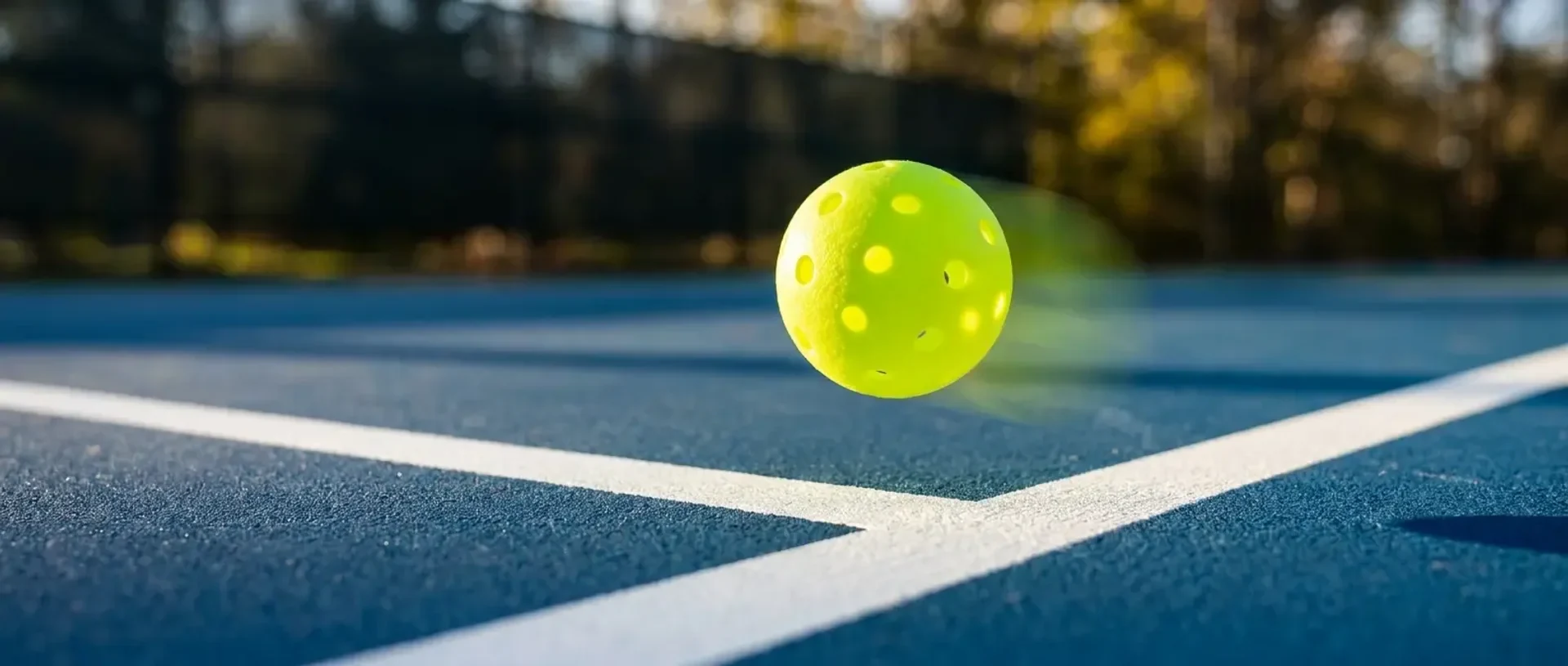
Pickleball is a doubles or singles paddle sport played on a 20-by-44-foot court to 11 points (win by 2), with serves made underhand below the waist into the diagonal box, a no-volley zone seven feet from the net, and only the serving team scoring in traditional play.
The 2026 USA Pickleball rulebook went into effect on January 1 and the headline shift is a tightening of subjective language: serves now have to be clearly legal, line-call timing has explicit expectations, and the old soft guidance about consulting spectators is now a hard prohibition. The court, the kitchen, the scoring, and the two-bounce rule are all unchanged.
Pickleball in 60 seconds
- Court and net. 20 feet wide by 44 feet long, same dimensions for singles and doubles. The net sits 36 inches at the posts and 34 inches in the middle.
- Serve. One attempt, underhand, made diagonally into the opposite service box. The ball must clear the non-volley zone (kitchen) and its line. Let serves are live and play on. Full breakdown in our serve guide.
- Two-bounce rule. The return of serve must bounce, and the first shot after the return must also bounce. After those two bounces, either team can volley.
- Kitchen. The 7-foot zone on each side of the net where you cannot volley. Standing in it is fine. Volleying while any part of you or your momentum touches it is a fault.
- Scoring. Games to 11, win by 2. In traditional doubles only the serving team scores, and the call has three numbers: server score, receiver score, and server number (1 or 2).
What changed in 2026
These are the approved changes in the January 2026 rulebook. Core mechanics stayed the same. Most updates tighten wording, close enforcement gaps, or formalize things officials were already doing.
| Area | 2025 rule | 2026 rule | Why it changed |
|---|---|---|---|
| Volley serve standard (Rule 4.A.5) | Contact below waist, paddle head below wrist, upward arc at contact. | Same three requirements, each qualified by the word clearly. Borderline serves are now ruled faults rather than given to the server. | Removes referee benefit-of-the-doubt on close serves and pushes servers to adopt obviously legal motions. |
| Spin on the release (Rule 4.A.5) | No added spin from the release hand. | Explicit prohibition on using fingers to impart spin while releasing the ball. Spin created by the paddle at contact remains legal. | Closes the "finger-flick" workaround some servers used to dodge the 2021 spin ban. |
| Multiple hits (Rule 11.A) | Double hits legal if they occur in one continuous, unidirectional motion. | Same standard extended explicitly to three or more contacts, provided the motion stays continuous and unidirectional. | Reflects how referees were already ruling rare triple-contact rallies. |
| Line-call timing (Rule 6.D) | Out calls made with reasonable promptness; "any doubt" meant the ball was in. | Out calls must be made promptly after the ball becomes dead. A delayed call is no longer valid. The language referencing "doubt" has shifted toward "conflict," meaning if partners disagree after the rally, the ball is in. See our line calls guide for the full mechanics. | Stops the common abuse of waiting to see whether a partner could return the ball before yelling "out." |
| Spectator consultation (Rule 6.D.9) | Players should not ask spectators for help with line calls. | Players must not consult spectators. Violations are subject to verbal warnings and technical fouls. | Converts guidance into an enforceable rule and gives referees a clear lever. |
| Visible second ball (Rule 7) | No explicit fault for an extra ball in a pocket. | Carrying a second ball that becomes visible to opponents during a live rally is a fault. | Closes a visual-distraction loophole and standardizes what officials had been calling inconsistently. |
| Ball off a permanent object after a bounce (Rule 11.L) | Rule was ambiguous when a ball bounced in bounds and then blew or spun into the net post or other object. | If a ball legally crosses the net, bounces inside the opponent's court, and then contacts a permanent object, the rally ends and the hitter wins the point. | Aligns the rulebook with how weather and spin can affect a ball that is already technically "in." |
| Pre-match conduct (Rule 13.G) | Referee authority to warn or penalize began when play started. | Referees may issue verbal warnings and technical fouls during warm-ups and the pre-match briefing. | Covers outbursts, equipment abuse, and unsportsmanlike conduct that occurred before the first serve. |
| Violence and property damage (Rule 13.H) | Disqualification possible for flagrant conduct. | Explicit language permitting tournament ejection for physical violence that causes injury and for damage to the venue or facilities. | Gives tournament directors unambiguous grounds for removing dangerous or destructive players. |
| Adaptive Standing Division (Rules 2.E and related) | No formal standing adaptive division. | Formalized division for players with significant mobility or balance impairments. Eligible players may take two bounces before returning the ball, and the second bounce can land anywhere on the playing surface. | Expands sanctioned competition to players who were already playing informally under house rules. |
| Rally scoring formats (Rule 12) | Rally scoring existed in some league formats but was not consolidated in the rulebook. | Approved rally-scoring match formats are outlined with event-specific exceptions. Traditional side-out scoring remains the USAP default. | Acknowledges rally scoring's growth in MLP and club leagues while keeping the tournament standard consistent. |
Serving rules
Two serves are legal: the volley serve and the drop serve. You pick one on each attempt.
Volley serve
You strike the ball out of the air without dropping it first. In 2026 the three requirements all carry the word clearly (Rule 4.A.5):
- The paddle must clearly contact the ball below the waist (defined as the navel).
- The paddle head must be clearly below the wrist at the moment of contact.
- The paddle motion must move in a clearly upward arc.
The practical effect: if a referee can't tell whether your serve met a requirement, it's a fault. Servers whose mechanics lived on the edge of legal in 2025 will want to lower the contact point and flatten the wrist.
Drop serve
You release the ball and let it bounce once before hitting. There are no paddle-motion or contact-height restrictions on a drop serve. You may release from any height, but the release must be unaided. No toss, no spin imparted by the fingers, no dropping the ball onto the paddle.
Restrictions that apply to both
- At least one foot behind the baseline, neither foot touching the baseline or outside the imaginary sideline extension, at the moment of contact.
- Served diagonally into the opponent's service box.
- The serve and the kitchen line count as faults if the serve lands on or in the non-volley zone.
- One attempt per rally. There are no second serves.
- Let serves that clear the net and land in are live.
The two-bounce rule
After the serve, the receiving team must let the ball bounce once before returning it. The serving team must then let that return bounce once before hitting their third shot. Only after those two bounces can either team volley.
This rule exists to neutralize the serve-and-volley advantage. Without it, one team could rush the net every point and turn pickleball into a reaction game. The two-bounce rule forces both teams into a baseline exchange first, which is why the "third shot drop" became the sport's signature shot: it's the serving team's tool for getting to the kitchen line after the forced bounce.
Kitchen / non-volley zone rules
The kitchen is the 7-foot area on each side of the net, including all its lines. The rule is narrow but strict: you cannot volley the ball while any part of you, your paddle, or anything you are wearing or carrying is touching the kitchen or its line.
Key fault situations (Rule 9):
- Volleying while in. Any contact with the kitchen or its line at the moment of a volley is a fault.
- Momentum. If your momentum from a volley carries you into the kitchen after you hit, it's a fault, even if the ball is already dead.
- Dropped objects. A hat, sunglasses, or ball that falls into the kitchen during or immediately after your volley is a fault.
- Partner pull-out. Your partner cannot steady you, catch you, or pull you back out of the kitchen to avoid a momentum fault. The fault is already committed.
What is not a fault: standing in the kitchen, walking through it, staying in it all rally, or hitting a groundstroke from inside it. The kitchen only restricts volleys.
Line calls and disputes
Pickleball is mostly self-officiated in recreational and most amateur-tournament play. The governing rules (Rule 6.D):
- Own side only. You call lines on your side. You do not call your opponents' lines against them.
- In if not clearly out. A ball is in unless you can clearly see space between the ball and the line. If you can't see that space, the ball is in.
- Prompt calls. Out calls must be made promptly after the ball becomes dead. Calling "out" only after your partner shanks the return is not a valid call, and the ball is ruled in.
- Partner conflict. If you and your partner disagree on a call, the ball is in. The 2026 language leans on the word conflict rather than the old "any doubt" phrasing, but the practical result is the same: ties go to the opponent.
- No spectator help. Players must not ask or accept guidance from spectators on line calls. The 2026 rulebook upgraded this from "should not" to a mandatory prohibition, and referees can issue technical fouls for violations.
Scoring
Traditional USAP scoring is side-out: only the serving team can score.
- Games. To 11 points, win by 2. Tournament finals and some formats play to 15 or 21, still win by 2.
- The call. In doubles the server calls three numbers before every serve: server's score, receiver's score, server number (1 or 2). Example: "4-2-2" means the serving team has 4, the receiving team has 2, and the second partner is serving.
- First server exception. At the start of the game, the first serving team only gets one server before a side-out. After that, each team gets two servers per side-out.
- Side-out. A fault by the serving team ends their service turn. If it was the first server, the partner serves next. If it was the second server, the ball goes to the other team.
- Singles. Only two numbers are called (server's score, receiver's score). Server position is determined by the server's score: even score serves from the right, odd from the left.
Rally scoring is used in some leagues and formats, notably Major League Pickleball and some college and club circuits. USA Pickleball has formalized approved rally formats in the 2026 rulebook but traditional side-out scoring remains the default for sanctioned tournament play. If you're playing a league, check the format before the first serve.
Common faults
- Serve that misses the diagonal service box, lands in the kitchen, or hits the kitchen line.
- Volley while touching the kitchen or its line, or with momentum carrying into the kitchen.
- Two-bounce-rule violation (volleying the return of serve or the third shot).
- Ball hit into the net or landing out of bounds.
- Ball struck before it crosses the net, unless the ball has already crossed and spun back (Erne situations are legal when executed correctly).
- Player, paddle, or clothing touching the net or net post while the ball is live.
- Ball contacting a player or anything they're wearing or carrying, other than the paddle or the paddle hand below the wrist.
- Double-bounce on your own side before returning.
- Foot fault on the serve: stepping on or over the baseline or outside the sideline extension at contact.
- Carrying a visible second ball during the rally.
- Delayed out calls.
- Consulting a spectator on a line call.
References
- USA Pickleball Official Rulebook 2026
- USAP 2026 Rule Changes Summary · Rule numbers cited inline (4.A.5, 6.D, 9, 11.A, 11.L, 12, 13.G, 13.H)
- USA Pickleball Adaptive Standing Division
Frequently asked
Tap a question to expand.

Reader notes on this guide
Sign in with your email to post. We do not run ad networks; comments are moderated for spam and abuse.
Loading comments...
Sign in to add a comment.