
Best pickleball balls (2026)
By My Pickleball Connect Team 8 min read Last reviewed

Most players I talk to spend hours agonizing over paddles and then grab whatever ball is on the shelf. That is backwards. The ball decides how the rally feels more than people give it credit for. A hard, fast outdoor ball turns a casual game into a reflex contest. A soft indoor ball makes the same court play like a different sport.
This is a 2026 spec-sheet and recommendation guide. I am not going to pad it with a generic indoor versus outdoor explainer. If you want that, I have a separate piece on indoor versus outdoor pickleball balls and a broader indoor versus outdoor pickleball overview. This article is the cheat sheet you bring to the checkout page.
What "USAP-approved" actually means
Every ball worth buying carries the USA Pickleball stamp. To earn that stamp the ball has to pass a battery of tests covering diameter, weight, hardness, bounce, and roundness. The current standards live in the USA Pickleball equipment manual, and the approved-ball list is updated several times a year.
The short version: a legal ball is between 2.874 and 2.972 inches in diameter, weighs 0.78 to 0.935 ounces, and bounces 30 to 34 inches when dropped from 78 inches onto granite. That sounds nitpicky, but those tolerances are why a Dura feels different from a Franklin even though both are legal. Each brand picks its sweet spot inside the box.
If you only play rec games at the park, USAP approval is a nice-to-have. If you plan to enter any sanctioned tournament, it is required. I will only cover approved balls below.
The hardness and durability tradeoff
This is the single most important thing to understand about ball shopping. Harder balls fly faster, hold their shape better in cold air, and survive longer on rough concrete. They also crack more often, because the same stiffness that resists deformation also resists impact stress.
Softer balls feel friendlier, take spin better, and slow rallies down a touch. They tend to go out of round before they crack. You replace them when they wobble, not when they split.
Neither is "better." A 4.0 player drilling on hot asphalt wants something hard and fast. A mixed-skill rec group on a windy spring evening wants something a little softer so the rallies last longer than two shots.
The major outdoor balls
Franklin X-40
The default tournament ball for a huge slice of US events. Hard plastic, drilled holes, balanced flight. The X-40 is the ball most rec players have hit the most, even if they do not know it by name. It cracks more in cold weather than in summer, but in the 60 to 85 degree range it is consistent and predictable.
Dura Fast 40
The original tournament ball. Slightly harder feel than the X-40, a touch faster off the paddle, and famously crack-prone in cool weather. The Dura is what built competitive pickleball, and a lot of older players still swear by it. If you grew up on Duras you will probably hate every other ball for a week before adjusting.
ONIX Dura Fast 40
Same ball as the Dura Fast 40, sold under the ONIX label after the brands aligned. If you see "ONIX Dura" on a shelf, treat it as identical to the original Dura. Do not pay a premium for one over the other.
Selkirk Pro S1
Selkirk's answer to the X-40. Slightly softer feel, holds spin a hair better, and the seam is less obvious than on a Dura. A growing number of regional tournaments have moved to the Pro S1 because it pairs nicely with modern paddles. League-night reports suggest the SX-A cracks less often than a Dura, though no controlled test we know of has been published.
Wilson Tru 32
32 holes instead of 40, which Wilson claims gives a truer flight in wind. It is heavier-feeling than the X-40 and noticeably louder off the paddle. Players either love it or quietly leave it in the bag. Worth trying if you play in consistently windy conditions.
The major indoor balls
ONIX Fuse Indoor
The most common indoor tournament ball. Larger holes, softer plastic, a duller bounce than any outdoor ball. The Fuse takes spin really well and is forgiving on a hard gym floor. Most indoor leagues I know of default to Fuse.
Jugs Pickleball
The old-school indoor ball. Bright, soft, and almost squishy compared to a Fuse. Some players find it dead, others find it the most controllable indoor ball ever made. If your gym uses Jugs you will know within five minutes whether you like them.
Franklin X-26 Indoor
26 holes, soft shell, a little livelier than a Jugs and a little duller than a Fuse. Franklin's indoor offering has gotten better over the last few years, and the X-26 is now a real option rather than a fallback.
Why tournament organizers pick what they pick
Three reasons, in order: sponsorship, regional supply, and player familiarity.
Sponsorship is the biggest one. If a brand pays to put its logo on the banner, its ball is on the court. That is how Franklin became the default for huge swaths of the country and how Selkirk has pushed into events that used to be Dura territory.
Regional supply matters because tournaments need cases of balls, not dozens. A director will pick the ball they can actually source on time.
Player familiarity is the tiebreaker. If the local 4.5 league has been playing X-40s for three years, the regional tournament will use X-40s. Nobody wants to show up and find a ball they have never hit.
What is a realistic crack rate
This is the question I get most. Here is the honest answer.
In summer outdoor play with a Dura Fast 40 or X-40, expect to retire a ball every one to three games at the 4.0-plus level. Most of those retirements are from going out of round, not cracking. Actual cracks happen maybe once every five to ten games when it is warm.
In cold weather, crack rates spike. Below about 50 degrees Fahrenheit a Dura can crack on the first hard drive of a game. The X-40 is a little more resilient. Coaches and league organizers commonly cite the Selkirk Pro S1 as the most cold-tolerant of the major hard balls, though none of them are reliable below 40 degrees. If you play through winter, my cold-weather pickleball guide covers what to do about it.
Indoor balls almost never crack. They get stepped on, lose their shape, and pick up scuffs from gym floors. Expect a Fuse or Jugs to last weeks of regular play before it needs replacing.
What to buy first, by use case
Rec outdoor at the local park
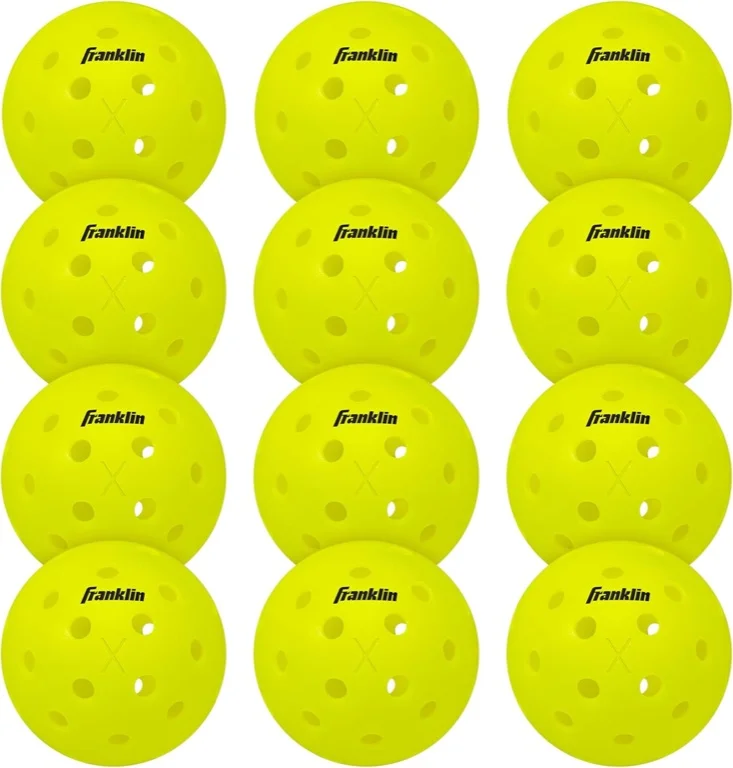
Buy a sleeve of Franklin X-40s. Three balls is plenty to start. The X-40 is the most universal outdoor ball in the country, and if you ever join a tournament you will probably play it again. The case-of-100 (often labeled X-40 Performance) drops per-ball cost by roughly a third.
Rec indoor at the gym or community center
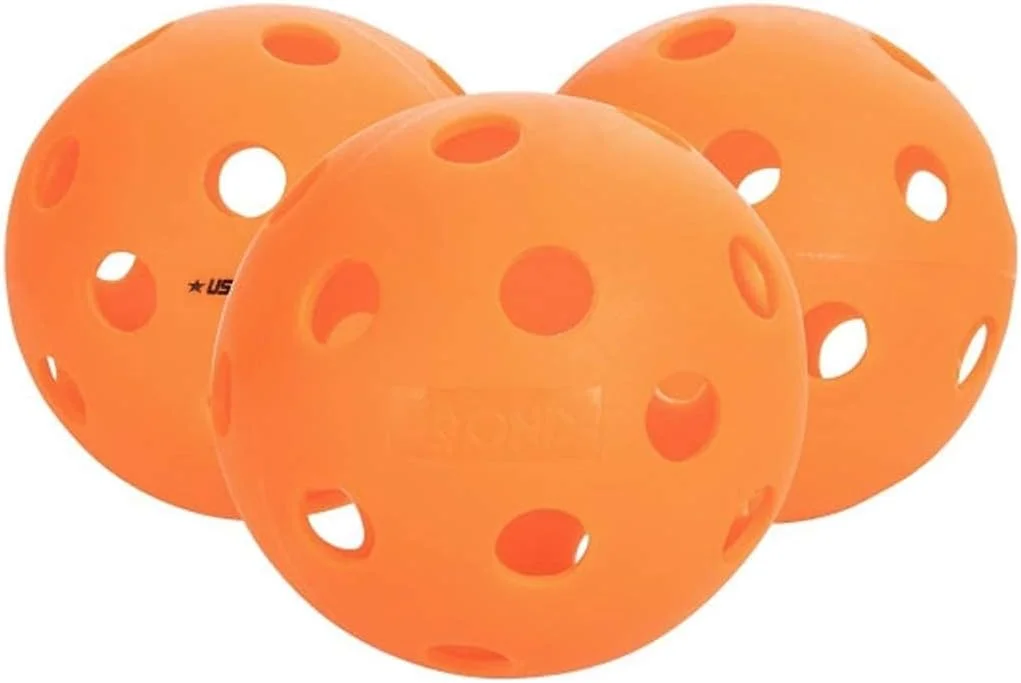
Buy ONIX Fuse Indoors. They are the closest thing indoor pickleball has to a default. If your gym already provides balls, just match what they use so your practice transfers.
League night
Match whatever your league uses for matches. If your league plays X-40s, drill with X-40s. The worst thing you can do is practice with a soft ball and play matches with a hard one. Your timing will be off all night.
Tournament practice
Buy a case (usually 100 balls) of whatever ball the tournament uses. Check the event's equipment page or ask the director. A case sounds like a lot, but if you are practicing three times a week for a month before the event, you will go through it. My tournament packing list has more on what to bring on event day, including how many fresh balls to keep in your bag.
A few buying tips that save money
Buy by the case if you play more than twice a week. Per-ball cost drops by roughly a third versus three-packs.
Store balls indoors at room temperature. A trunk in summer or a garage in winter shortens their life noticeably.
Mark your practice balls. A Sharpie dot on the seam tells you which ball is fresh and which has been hit a thousand times.
Do not mix old and new balls in the same drill. Your reads will be inconsistent and you will blame your paddle.
Bottom line
For most outdoor rec players in 2026, the Franklin X-40 is the right starting point. For most indoor rec players, the ONIX Fuse is the right starting point. Everything else is a tweak based on weather, league rules, or personal feel. Pick one, hit it for a month, and only switch if you have a specific reason. Chasing balls the way people chase paddles is a fast way to spend money without getting better.
The four USAP-approved outdoor balls in one row
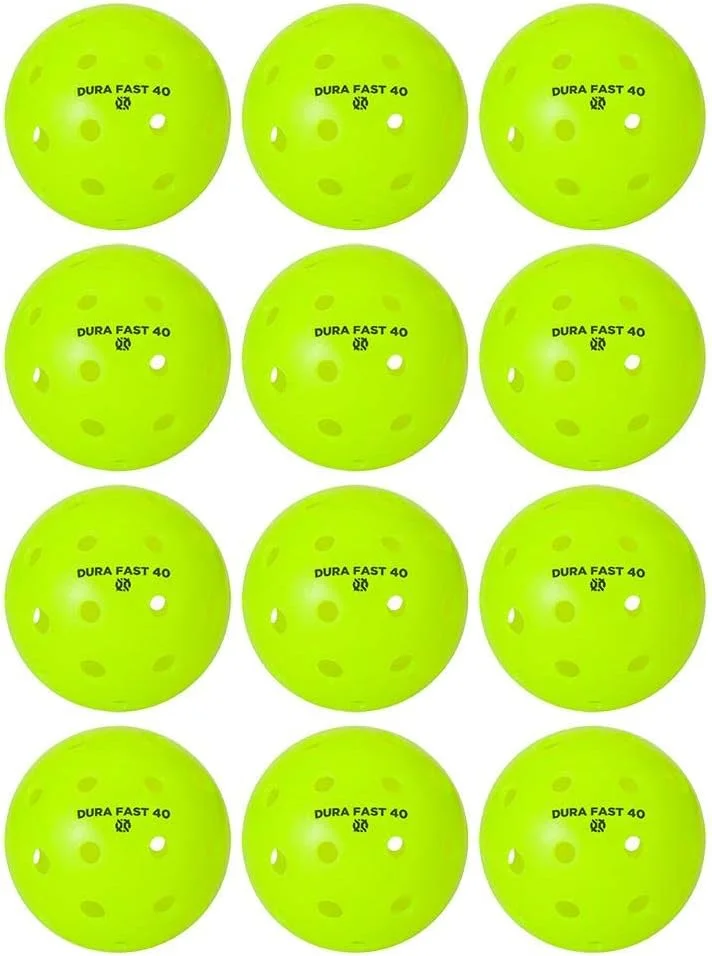
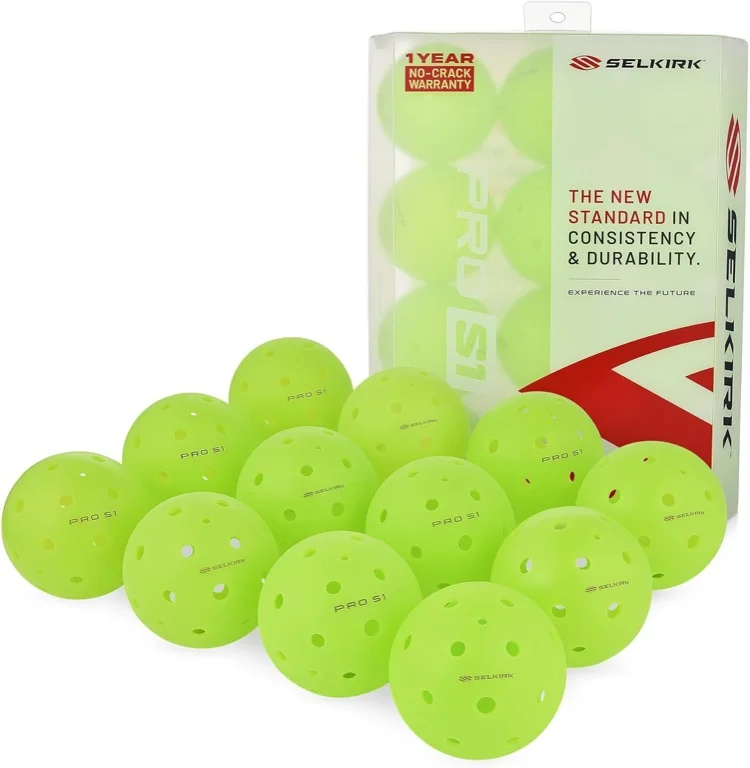
Where to buy: Franklin X-40 (Amazon), Dura Fast 40 (Amazon), Onix Fuse Indoor (Amazon), Selkirk Pro S1 (Amazon). Case buying (100 balls) typically drops per-ball cost by about a third.
References
- USA Pickleball Equipment Standards Manual · Authoritative source for ball specifications and the approved-ball list.
Frequently asked
Tap a question to expand.

Reader notes on this guide
Sign in with your email to post. We do not run ad networks; comments are moderated for spam and abuse.
Loading comments...
Sign in to add a comment.